This is some text inside of a div block.
Search across the whole Roadsides site


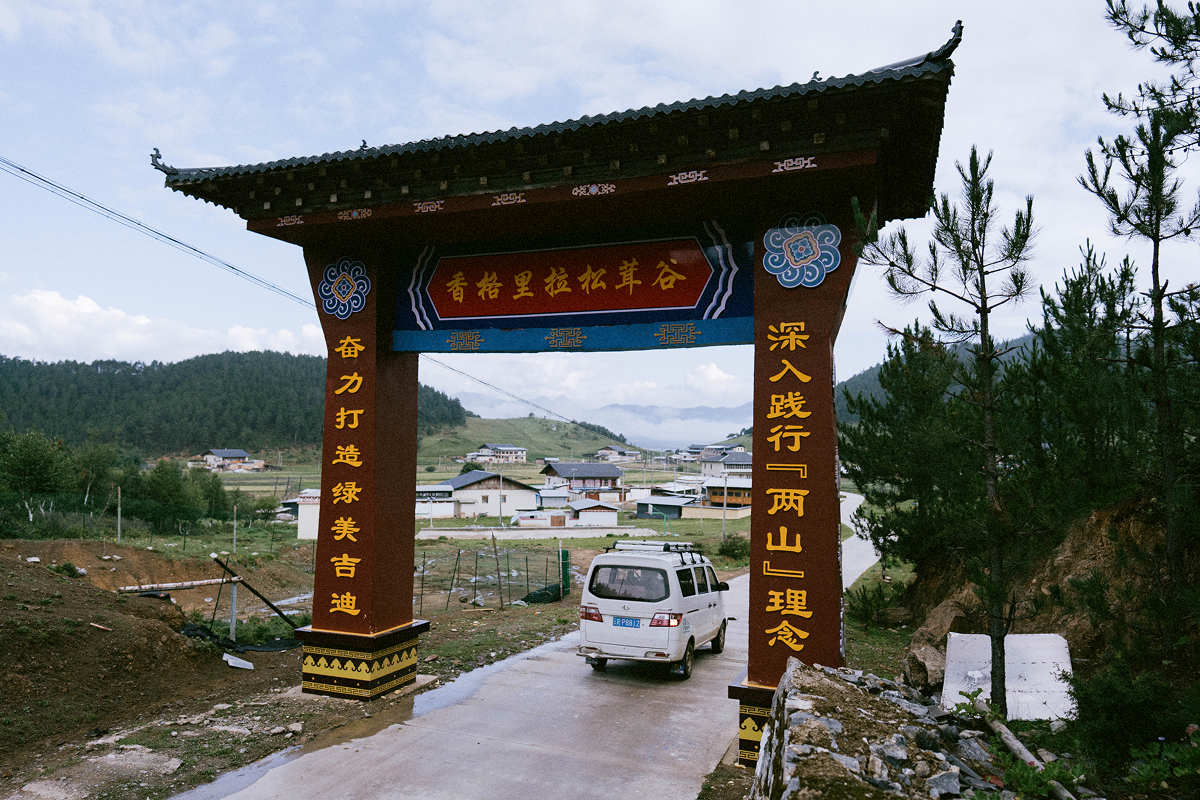
In late summer 2024, northwest Yunnan began to move with matsutake (松茸), one of the most closely studied non-timber forest commodities in the region (Yeh 2000; Hathaway 2022). Traders in Shangri-la kept directing me to Jidi, a village north of the town once known as Zhongdian.[1] Jidi has national resonance: the culinary documentary A Bite of China filmed its matsutake segment here (CCTV 2012), and the village has been associated with the fungus ever since. A gate at the village entrance bore the sign 松茸谷—‘Matsutake Valley’. Its slogans invoked the ‘Two Mountains’ concept, framing forests as ecological assets for development (Yeh 2023). Beyond the gate stood rows of apparently deserted houses. During peak season, the village empties into the forest, as in Tibetan cordyceps economies (Winkler 2009).
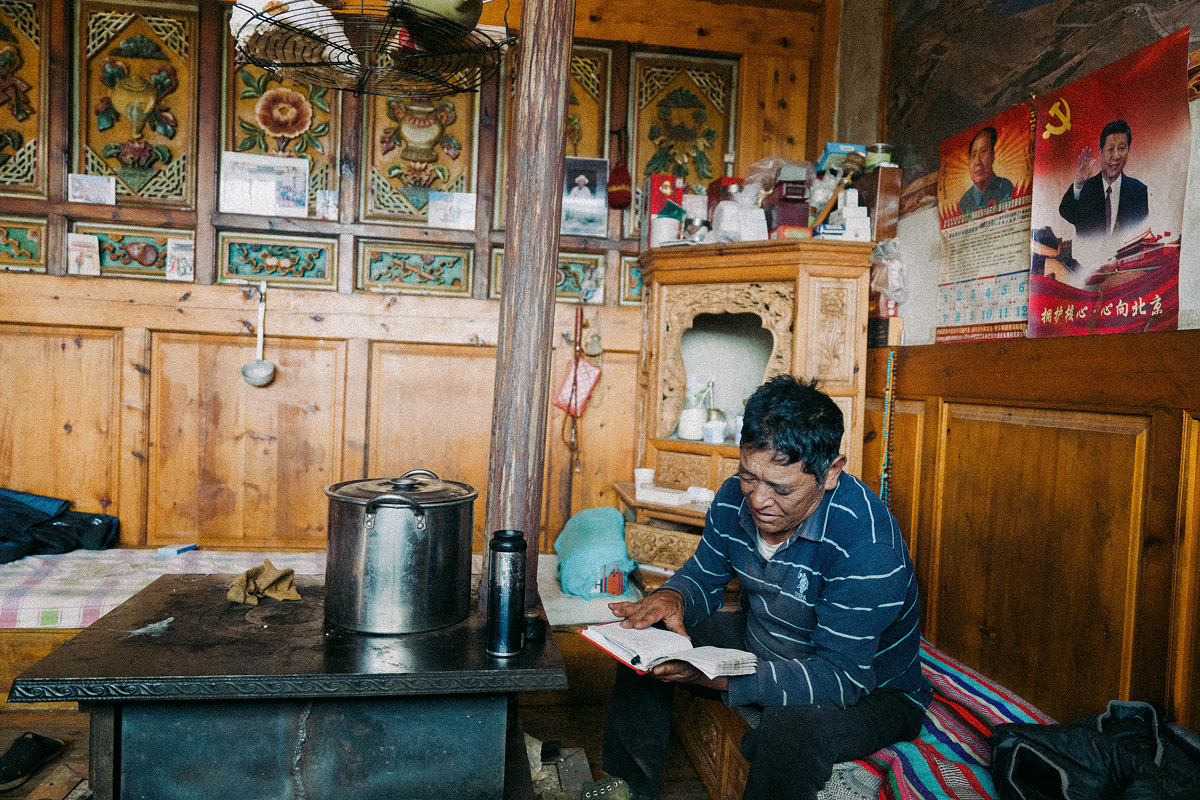
Dorje, an older villager who had just got back from the forest with a modest harvest, was weighing his mushrooms. His wife and daughter-in-law returned moments later with heavier baskets and, after a hurried lunch, set off again. “We leave at five in the morning and stay until eleven,” he explained, “then come home to weigh and eat before going back out from twelve until three.” Rather than returning to the forest, Dorje stayed behind to sell the day’s harvest and took me along with him to the village market. Watching this routine, I realized that the market extended beyond the trading hall. Much of the work required to make matsutake marketable had already taken place in the forest.
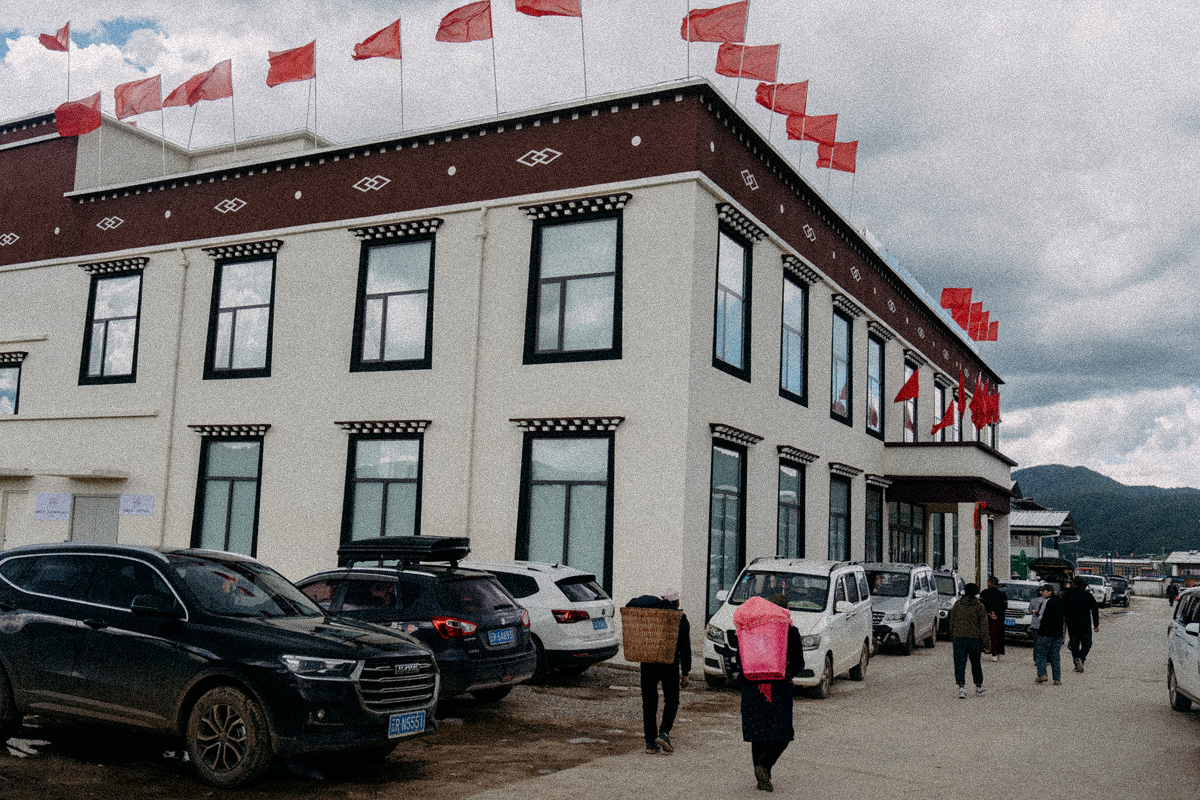
As we walked towards the village centre, mushroom-pickers could be seen gathering outside the new matsutake market. The dense display of national flags gave the building an official presence, situating this forest economy within longer-term projects of state incorporation and development in the Sino-Tibetan borderlands (Yeh and Coggins 2014; Galipeau 2024). In front of the locked entrance assembled people who had spent the morning scattered throughout the surrounding forests. Through the glass, I could already see traders waiting inside, seated behind their tables and scrolling on their phones. Standing in the crowd, I asked various pickers whether I might accompany them into the forest on another day, but they all declined. “There is no time. I have to go back quickly,” one woman replied.
Studies show that matsutake harvesting in northwest Yunnan is governed through village compacts (乡规民约), locally agreed rules that set when the forest opens for picking, who may harvest and what fees outsiders must pay (Yeh 2000). In many villages, access is common: every household may pick anywhere in the village’s collective forest. Increasingly, however, access is privatized, with the forest divided into plots whose harvesting rights are allocated to individual households or leased through open bidding (Yang et al. 2009). Forest labour remains self-directed, yet increasingly it unfolds according to the market’s temporal demands.
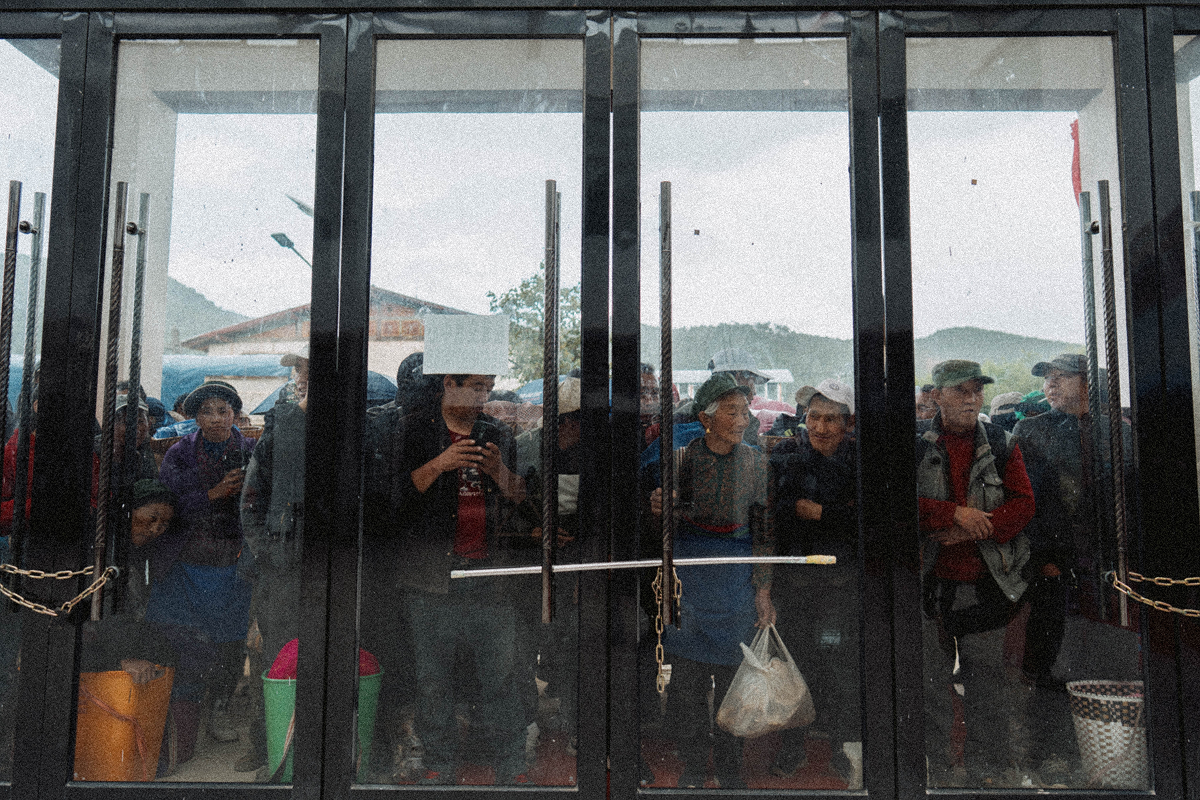
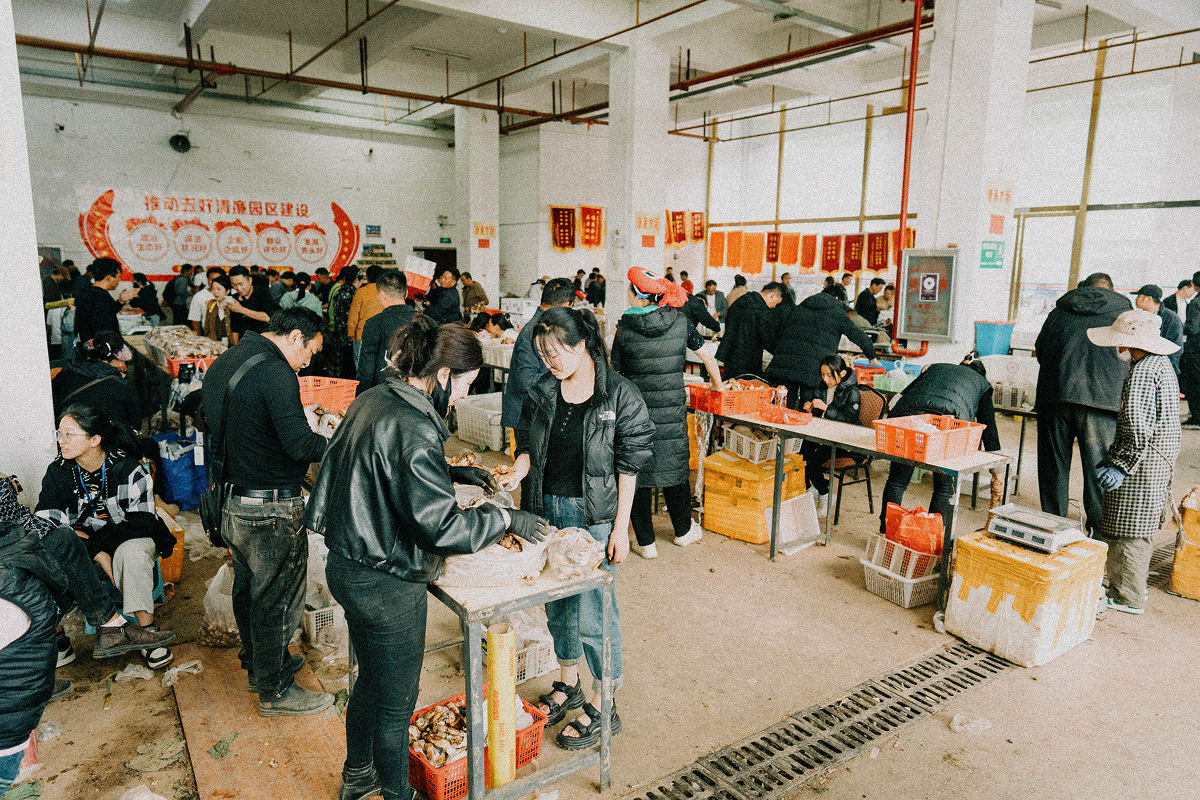
At the exact opening time, the market door was unlocked. The line lurched forward. Pickers rushed towards the traders’ tables, many of them returning to the same buyers they had traded with before. These relationships, and the trust they entailed, channelled the daily harvest through the market. As infrastructure, the new market building compressed the day’s trade into a narrow window timed to meet the logistical chain that followed. As the pickers returned to the forest, traders loaded fresh purchases into vans bound for Shangri-la.
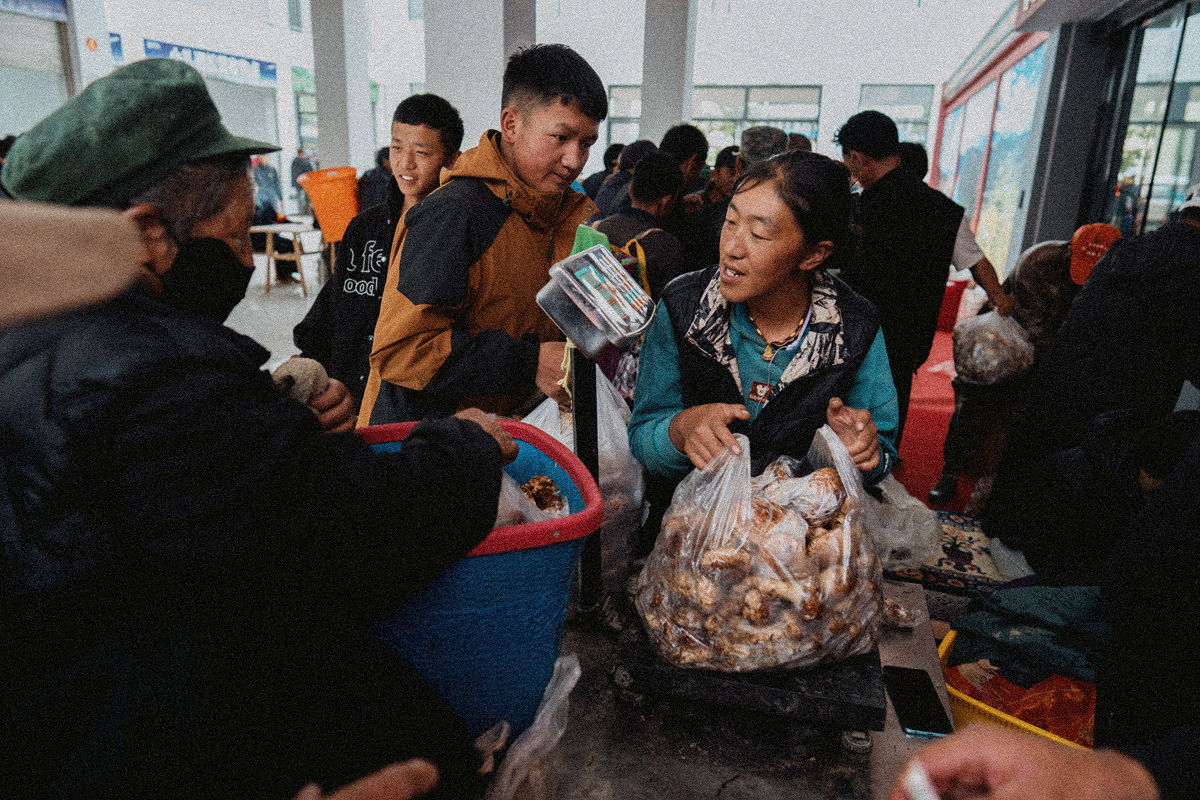
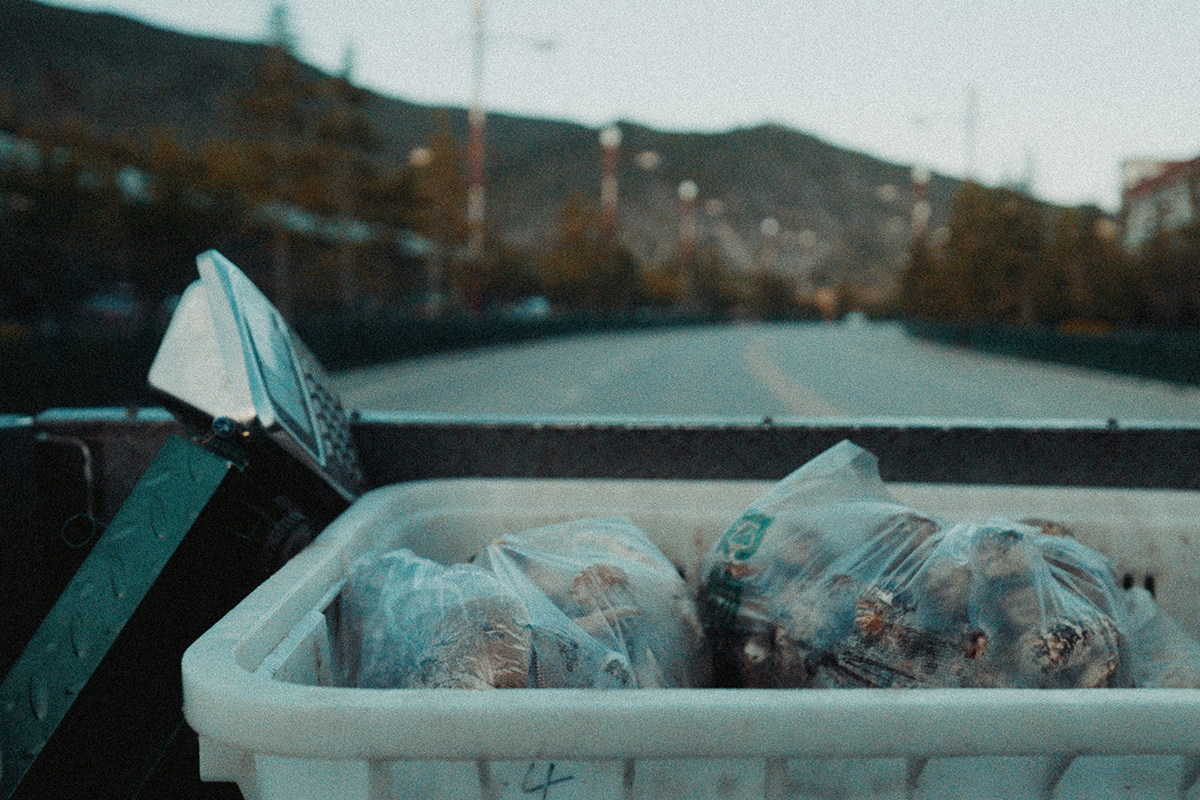
At the Shangri-la market, overnight handling was synchronized with the regular 8 a.m. flight to Kunming. Exhausted after his shift, one trader told me he had neither slept nor eaten breakfast. He had spent the night making sure that around 500 kilograms of fresh matsutake would be in the right hands by morning. “In the past, most of the mushrooms went directly to Japan,” he observed. “Since the pandemic, we mostly sell domestically, but it still takes up to seventy-two hours to reach anywhere in China.”
Shangri-la’s matsutake market had long been organized around export routes to Japan: established importers, exacting grading standards and regular international flights coordinated the rapid movement of fresh mushrooms. Domestic demand was already expanding before Covid-19, but the pandemic accelerated the shift. A sharp reduction in international passenger flights cut the air cargo capacity on which time-sensitive exports depended, while uncertainty about Japanese orders encouraged traders to seek buyers within China. When exports stalled, traders feared collapse. Instead, mushrooms previously destined for Japan entered a domestic market enabled by the logistics and digital platforms built over the preceding decade (SF Airlines 2021).
Freshness remains the main principle of the matsutake trade. Yet, as Freidberg (2009) has shown for other perishable foods, this is not just a natural condition but also a technical and commercial achievement (see also Perera 2025: 21–22; Wang 2026: 68). In Shangri-la, freshness forms part of a broader bundle of qualities, including size, maturity, intactness, appearance and origin. Traders must recognize these qualities in the mushroom’s form, translate them into grades (on such valuation, see Thiemann 2025: 28–29) and preserve that condition through a carefully timed logistical chain for buyers who cannot inspect it themselves.
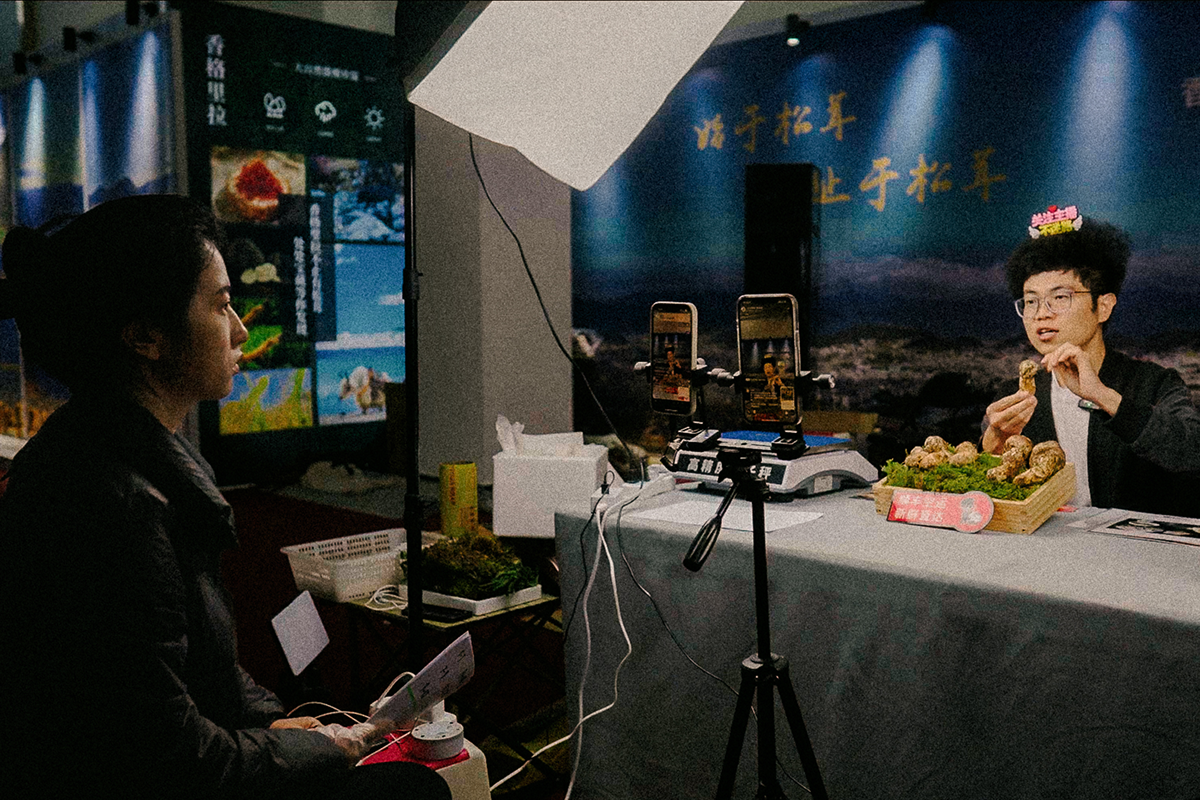
A scene in the market suggested how freshness is mediated to distant buyers. In one corner, a grading table had become a small broadcasting studio. Beneath a camera light, a presenter rotated matsutake before two smartphones, describing their freshness and purported health benefits, while another worker handled orders and shipping details. Qualities normally assessed through touch and smell were translated into visual demonstrations and verbal claims. Livestream selling joined the physical labour of handling mushrooms to the transactional labour of processing orders (Duan, Lin and van Dijck 2023). It also turned sensory inspection into a commercial encounter in which buyers could watch, ask questions and feel momentarily present in the market.
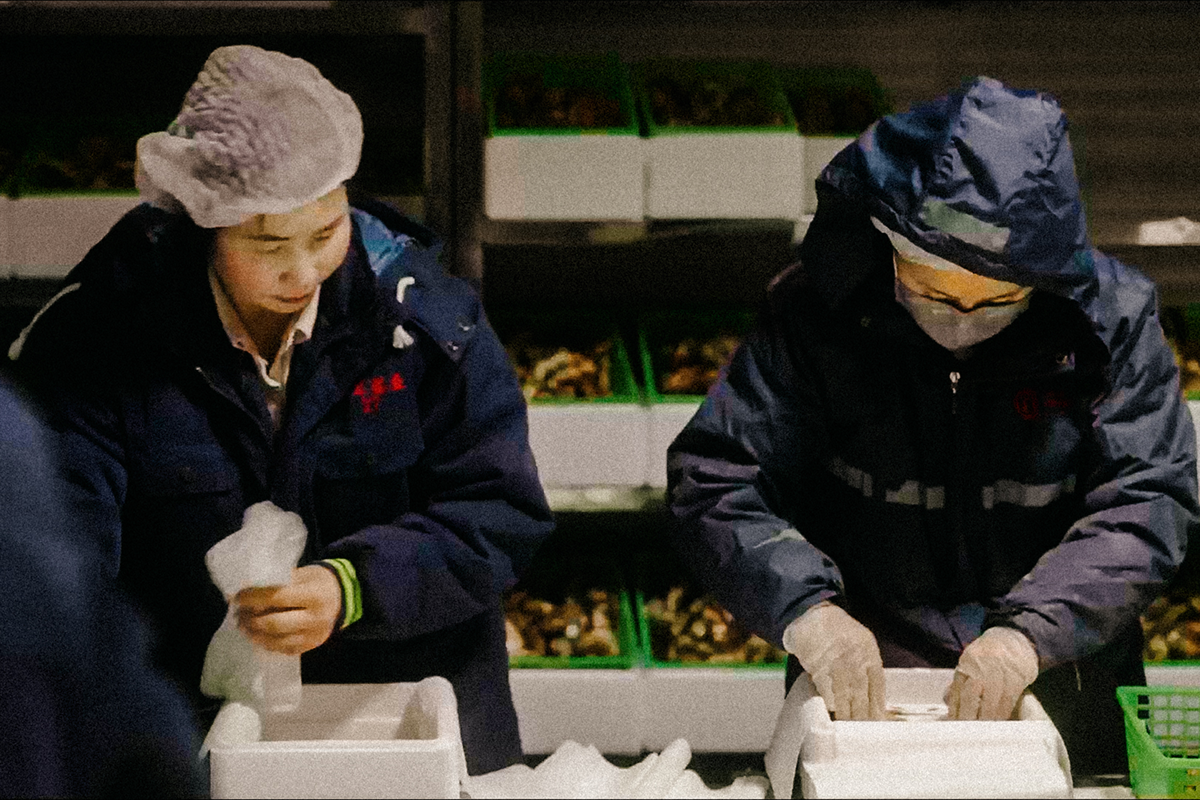
Matsutake reached Kunming’s Mushuihua Wild Mushroom Wholesale Market in labelled insulated boxes. Workers moved them into refrigerated rooms, then repacked and relabelled them for cities in southern and eastern China. Cold storage provided a limited window during which shipments could be consolidated and redirected before declining quality reduced their value, a buffer sustained by workers’ labour as much as by refrigeration (Hopkins 2022: 52, 56–57).
The mushrooms are graded again here, with size informing the initial sort. Yang Guang, whose family has traded matsutake for nearly forty years, took me through their warehouse, where the mushrooms are separated into 3–5 cm, 5–7 cm and 7–9 cm size bands. “The medium ones can be marketed as premium,” he said, “but size alone does not determine grade.” Within each band, mushrooms with open caps, insect damage or broken stems are placed in lower categories, while intact, firm specimens with tightly closed caps fetch higher prices. Classification, therefore, translates biological variation into shared commercial categories through which the produce can be priced, packaged and directed towards different buyers.[2] As Liang and Münster (2022) show for fresh cordyceps, perishable fungal commodities become saleable at a distance through interconnected arrangements of vacuum packaging, air freight and refrigeration. On a map in his office, Yang demonstrated how matsutake now move through a more formalized cold chain: they either fly directly to Shanghai, Guangzhou and Beijing, or transfer to a redistribution centre in Wuhan, from where onward delivery takes a further day. This has extended the geographical and commercial reach of a mushroom that continues to deteriorate in transit.
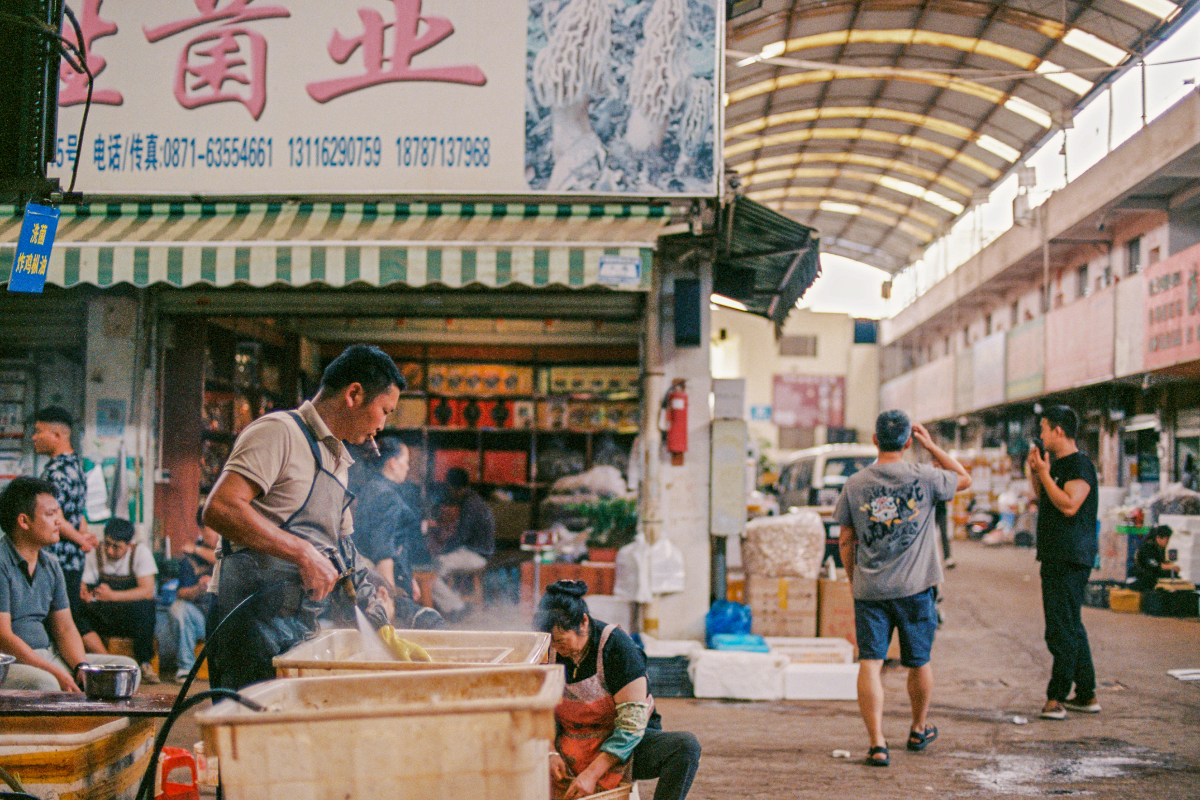
Across Yunnan, matsutake markets operate as highly tailored infrastructures, coordinating temporalities that do not readily align: the seasonal rhythms of foraging, fixed moments of exchange, the classificatory work of grading and packing, and the logistical time of transport. They compress time around harvesting, trading and dispatch while creating limited buffers through refrigeration and storage. Labour and material arrangements hold this chain together, while responsibility for losses caused by decay passes from one set of hands to another. Freshness is thus not a quality carried intact from forest to consumer, but a temporary accomplishment remade at every point where mushrooms change hands.
CCTV. 2012. “Nature’s Gift” (自然的馈赠). TV series: A Bite of China, season 1, episode 1. Directed by Chen Xiaoqing, aired 14 May. China Central Television.
Duan, Shichang, Jian Lin and José van Dijck. 2023. “Producing New Farmers in Chinese Rural Live E-Commerce: Platformization, Labor and Live E-Commerce Sellers in Huaiyang.” Chinese Journal of Communication 16 (3): 250–66.
Freidberg, Susanne. 2009. Fresh: A Perishable History. Belknap Press of Harvard University Press.
Galipeau, Brendan A. 2024. Crafting a Tibetan Terroir: Winemaking in Shangri-La. University of Washington Press.
Hathaway, Michael J. 2022. What a Mushroom Lives For: Matsutake and the Worlds They Make. Princeton University Press.
Hillman, Ben. 2003. “Paradise under Construction: Minorities, Myths and Modernity in Northwest Yunnan.” Asian Ethnicity 4 (2): 175–88.
Hopkins, Debbie. 2022. “Buffering as Everyday Logistical Labour.” Roadsides 7: 51–58. https://doi.org/10.26034/roadsides-202200708
Kolås, Åshild. 2008. Tourism and Tibetan Culture in Transition: A Place Called Shangrila. Routledge.
Liang, Siran and Daniel Münster. 2022. “Between Medicine and Gift: How Anticorruption, E-Commerce, and Biotechnology Fostered the Emergence of ‘Fresh Cordyceps’ in Sino-Tibetan Trade.” Asian Medicine 17 (2): 251–78. https://doi.org/10.1163/15734218-12341515
Peng, Shaojie. 2024. “Jidi Village, Shangri-La: Wealth beneath the Forest, Green Prosperity.” Yunnan Daily, 7 August. Republished by The Paper. https://www.thepaper.cn/newsDetail_forward_28337373
Perera, Meghal. 2025. “Thin Ice.” Roadsides 14: 20–26. https://doi.org/10.26034/roadsides-202501403
SF Airlines. 2021. “SF Airlines Launches Nation’s First Dedicated Matsutake Mushroom Cargo Route.” 5 August. https://www.sf-airlines.com/en/news/2126.html
Thiemann, André. 2025. “Information Infrastructure: Shaping Raspberries through Geographical Indication?” Roadsides 14: 27–34. https://doi.org/10.26034/roadsides-202501404
Wang, Zhengfeng. 2026. “Icehouses in Motion: Knowledge Flows Across the Cryosphere.” Roadsides 15: 67–75. https://doi.org/10.26034/roadsides-202601507
Winkler, Daniel. 2009. “Caterpillar Fungus (Ophiocordyceps sinensis) Production and Sustainability on the Tibetan Plateau and in the Himalayas.” Asian Medicine 5 (2): 291–316. https://doi.org/10.1163/157342109X568829
Yang, Xuefei, Andreas Wilkes, Yongping Yang, Jianchu Xu, Cheryl S. Geslani, Xueqing Yang, Feng Gao, Jiankun Yang and Brian Robinson. 2009. “Common and Privatized: Conditions for Wise Management of Matsutake Mushrooms in Northwest Yunnan Province, China.” Ecology and Society 14 (2): 30. https://doi.org/10.5751/ES-03129-140230
Yeh, Emily T. 2023. “The Making of Natural Infrastructure in China’s Era of Ecological Civilization.” The China Quarterly 255: 611–27. https://doi.org/10.1017/S0305741022001588
Yeh, Emily T. 2000. “Forest Claims, Conflicts and Commodification: The Political Ecology of Tibetan Mushroom-Harvesting Villages in Yunnan Province, China.” The China Quarterly 161: 264–78.
Yeh, Emily T. and Chris Coggins, eds. 2014. Mapping Shangrila: Contested Landscapes in the Sino-Tibetan Borderlands. University of Washington Press.
Zhang, Yuxing. 2022. “From Social Trust to Blockchain-Mediated Trust.” Roadsides 7: 44–50. https://doi.org/10.26034/roadsides-202200707
I am grateful to the many people I met during fieldwork in Yunnan who generously shared their time and knowledge during the mushroom season. I also thank Martin Saxer and my colleagues in the ERC project Foraging at the Edge of Capitalism for their continued support. This research was funded by the European Research Council (ERC) under Horizon 2020 grant agreement No. 101001792.