This is some text inside of a div block.
Search across the whole Roadsides site


If rabbits keep increasing, I would like to eat them again, as people did in the old days.
I heard this sentence during fieldwork on Amami Ōshima, one of the Ryukyu Islands in southern Japan. My informant knew that the Amami rabbit (Pentalagus furnessi) is designated as a Special National Natural Monument, endemic to Amami Ōshima and Tokunoshima and often referred to as a living fossil.
Those words open onto a larger history of changing relations with the same animal. The rabbit remembered as food is now protected under conservation law. After Satsuma’s invasion of Ryukyu in 1609 and the incorporation of the Amami Islands into Satsuma rule in 1611, the archipelago was drawn into an export-oriented sugar economy (Fumoto 2011: 66–67). I approach this development through another species, the black rat (Rattus rattus), within the infrastructures of the sugar economy. Sugarcane followed an intended route from field to warehouse, ship and market. Rats moved through that system differently. They entered the storehouses, partially consumed the sugar before it became tribute or revenue, and prompted repeated attempts to protect its stored value. Those efforts later became entangled with habu snakes (a species of pit viper endemic to the Ryukyu Islands), introduced mongooses and the conservation of species. The Amami rabbit helps show how economic infrastructures also alter relations between humans and other animals.
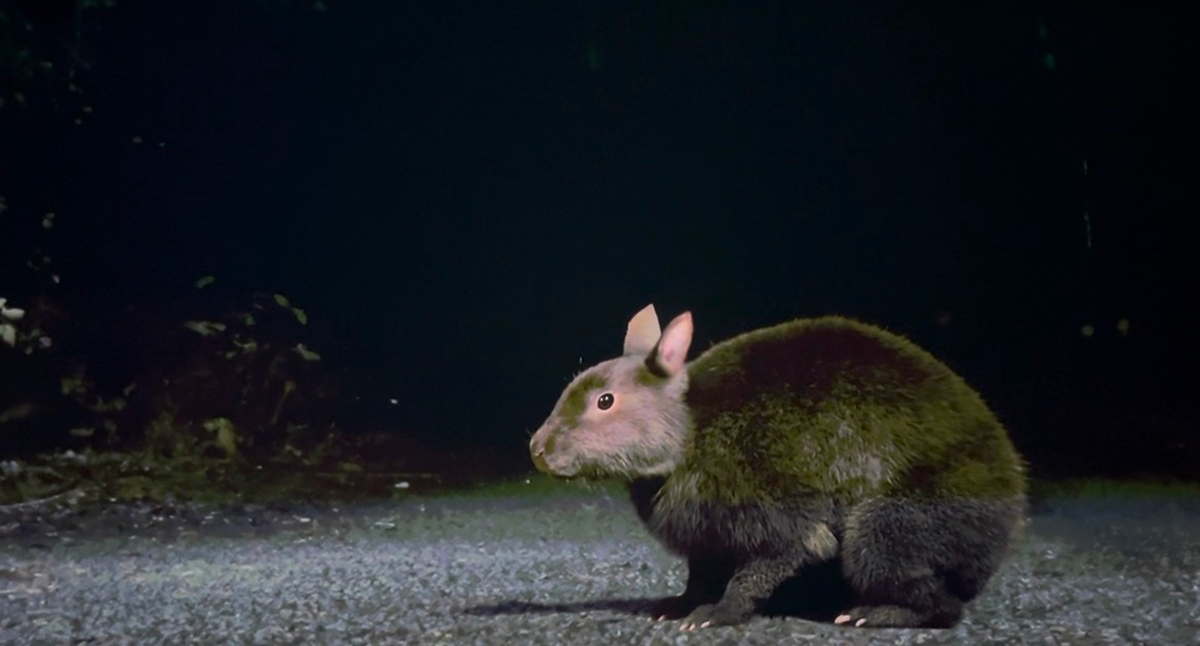
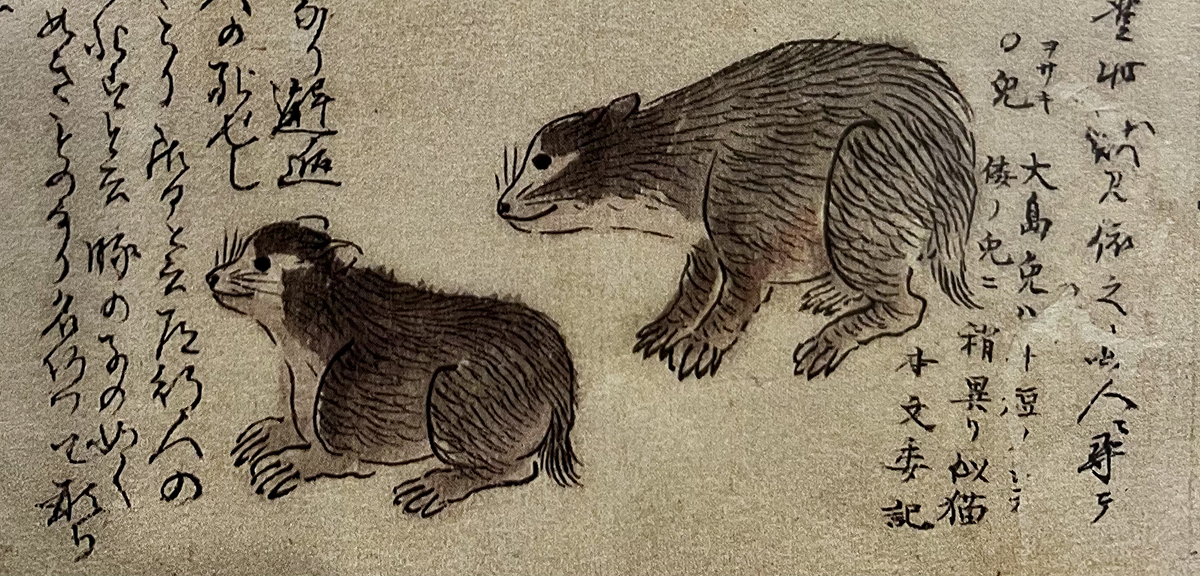
During Satsuma rule, the Amami rabbit was part of local practices of hunting and consumption, as documented in nineteenth-century records (Nagoshi 2022: 31–33). The expanding sugar economy created concentrated stores of produce that also attracted rats. Sugarcane fields replaced food crops, and tribute obligations tied cane to sugar, sugar to administration and administration to taxation. The 1745 order to pay tribute in sugar (換糖上納令) and an 1830 monopoly purchase system (惣買入制) made sugar a fiscal good before it became a commodity good. Islanders still remember this pressure as ‘black sugar hell’ (黒糖地獄).
To see how the Satsuma sugar market operated, we can trace the rat along the routes that connected fields, warehouses and shipping. Land was organized into cane fields and the roads that connected them. The sea was organized into a web of shipping routes. Inuzuka Takaaki (2004: 3–6) describes this land–water corridor as ‘islands of the road’ (道の島). The roads connected island cane-processing sites to warehouses. Sea routes moved island-produced brown sugar through Kagoshima to mainland markets. The market depended on shipping, and warehouses held the processed sugar until ships arrived. Shipped sugar carried value into Satsuma’s treasury, and the time sugar spent in the warehouse, where the rats ate, influenced how much of this arrived at the destination.
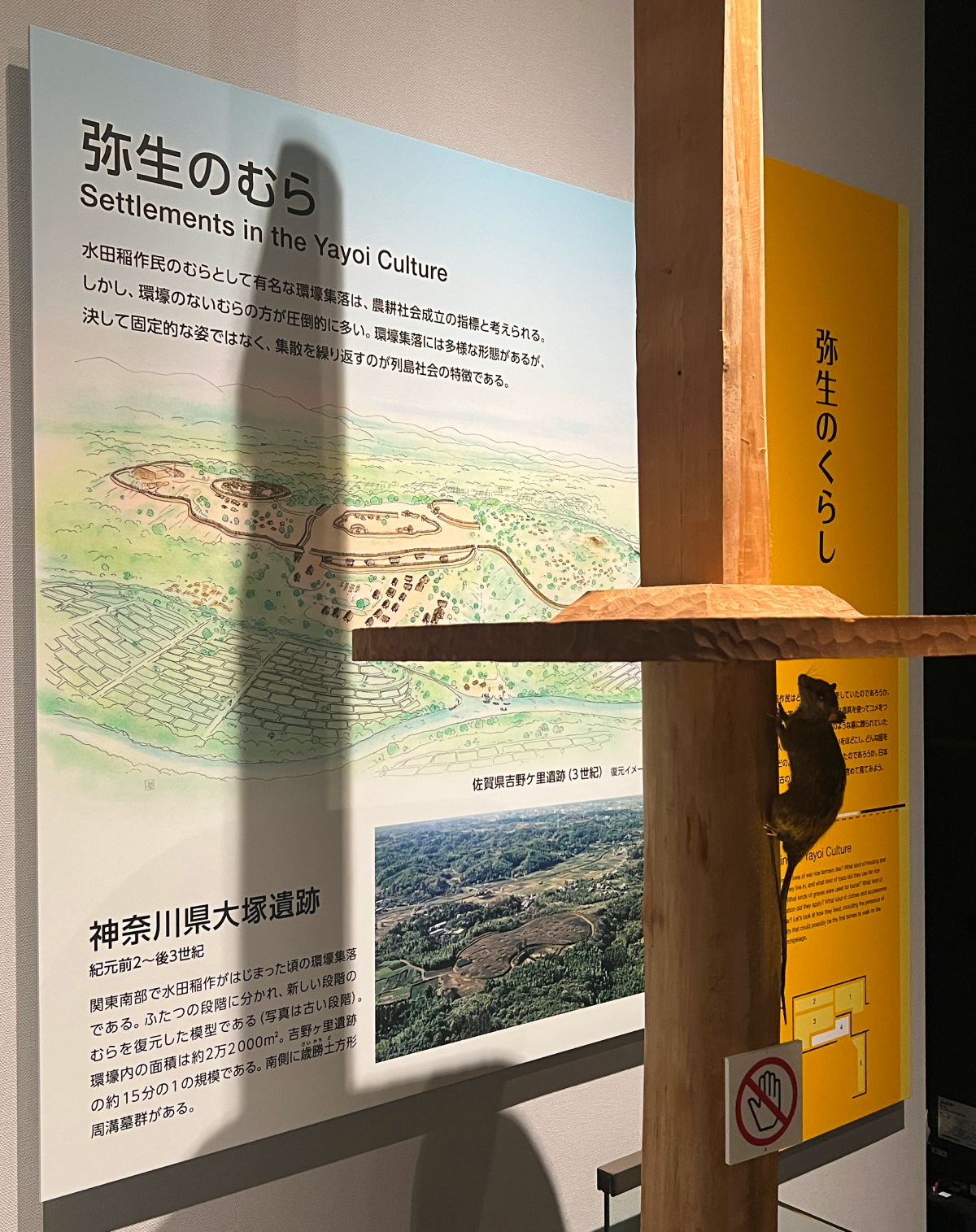
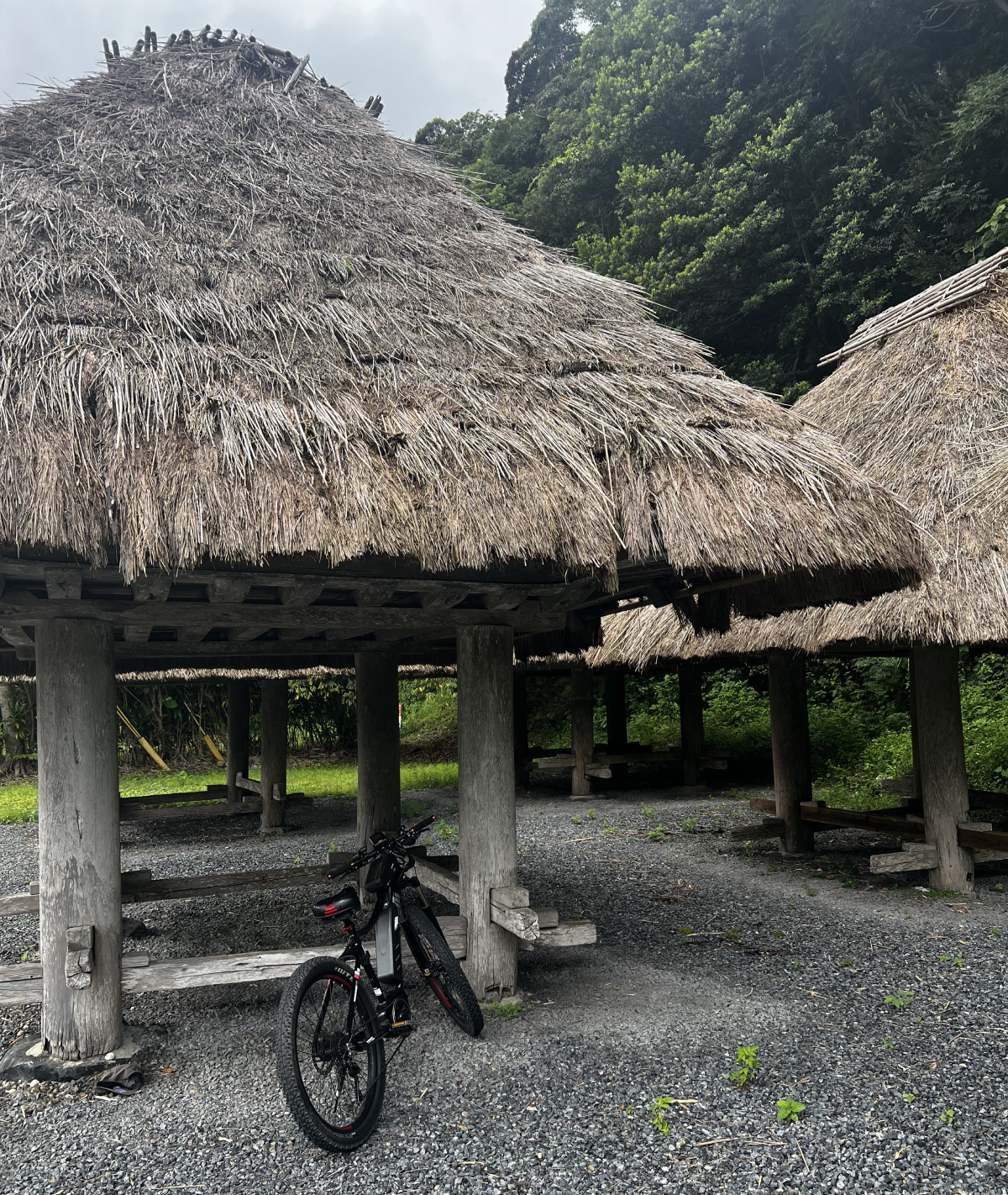
Black rats have a long association with food storage in Japan. In the National Museum of Japanese History, the Yayoi-period exhibition presents high-floor rice storehouses with ‘rat-guards’ (ネズミ返し), showing that protection against black rats was already part of food-storage solutions during this period, from about the tenth century BCE to the third century ce (Kyūtōryū Sadō 2023). On Amami, raised-floor granaries (高倉) similarly formed part of local storage architecture, while nineteenth-century accounts record extensive rat damage to grain and sugarcane. Across these different periods, the concentration of food created resources for rats and made control of these pests part of the work of protecting stored value.
This repeated relation between stored produce, rats and human efforts to protect food has historical depth. Haraway names unexpected, more-than-human beings with whom we are called into entangled responsibility as oddkin (Haraway 2016: 2–4, 221n20). The rat became oddkin within the sugar supply-chain because it drew sustenance from the goods, occupying storage and shaping everyday work. Cane was gathered in the fields, weighed at the warehouse and loaded onto ships. But the same storehouses that protected tribute sugar also fed rats; hence, stored crop abundance became rat abundance. Harvest losses to these animals were a built-in feature of storage infrastructure because the same materials that preserved the sugar also preserved the rat.
Polanyi’s concept of the market pattern explains how markets emerged and took shape with long-distance trade and the movement of goods (Polanyi 2001: 61–62). Specialized institutional arrangements such as roads, warehouses, ports and tax registers turned land and labor into commodities. On Amami, this abstraction became practical. The warehouse could organize sugar for fiscal collection, but it could not determine who consumed it. Following the rat draws attention to a gap between the market’s institutional arrangements and the more-than-human uses of its infrastructure.
Roffe’s (2015: 86–87) abstract market theory sharpens these ideas further. Price is part of the inscription of the market and it becomes socially realized through practices of valuation that go beyond the point of purchase. The rat entered this process at a precise moment. It consumed stored brown sugar before that sugar completed its passage into tribute, commodity or revenue. This is how the rat ate the market. The chewed sugar completed only part of its journey toward fiscal inscription, and the loss influenced how much value the warehouse could carry forward.
Rest and Kikon (2025: 1–4) describe how processing and storage make food tradeable. White and Sułek (2022: 2, 6–7) examine how animals use infrastructures beyond their intended purposes. These arguments suggest that a warehouse can serve different foodways at once. For Satsuma, it held sugar for tribute and trade whereas for rats, it offered food. Protecting the sugar therefore required more than maintaining a building. It also involved managing the animals that benefited from its everyday use.
Rats also entered wider ecological relations on Amami Ōshima, becoming abundant prey for habu snakes. In 1979, mongooses were introduced from Okinawa in an effort to control both habu snakes and rats, but they spread into the forests and preyed on other species, including the endemic Amami rabbit (Tatara 2010: 84–91). By around 2000, their population had reached an estimated ten thousand. In 2005, a specialist team known as the Amami Mongoose Busters was formed to capture them, and in September 2024, the Ministry of the Environment finally declared the mongoose eradicated from Amami Ōshima. What began as mere pest control became a long project of ecological repair.
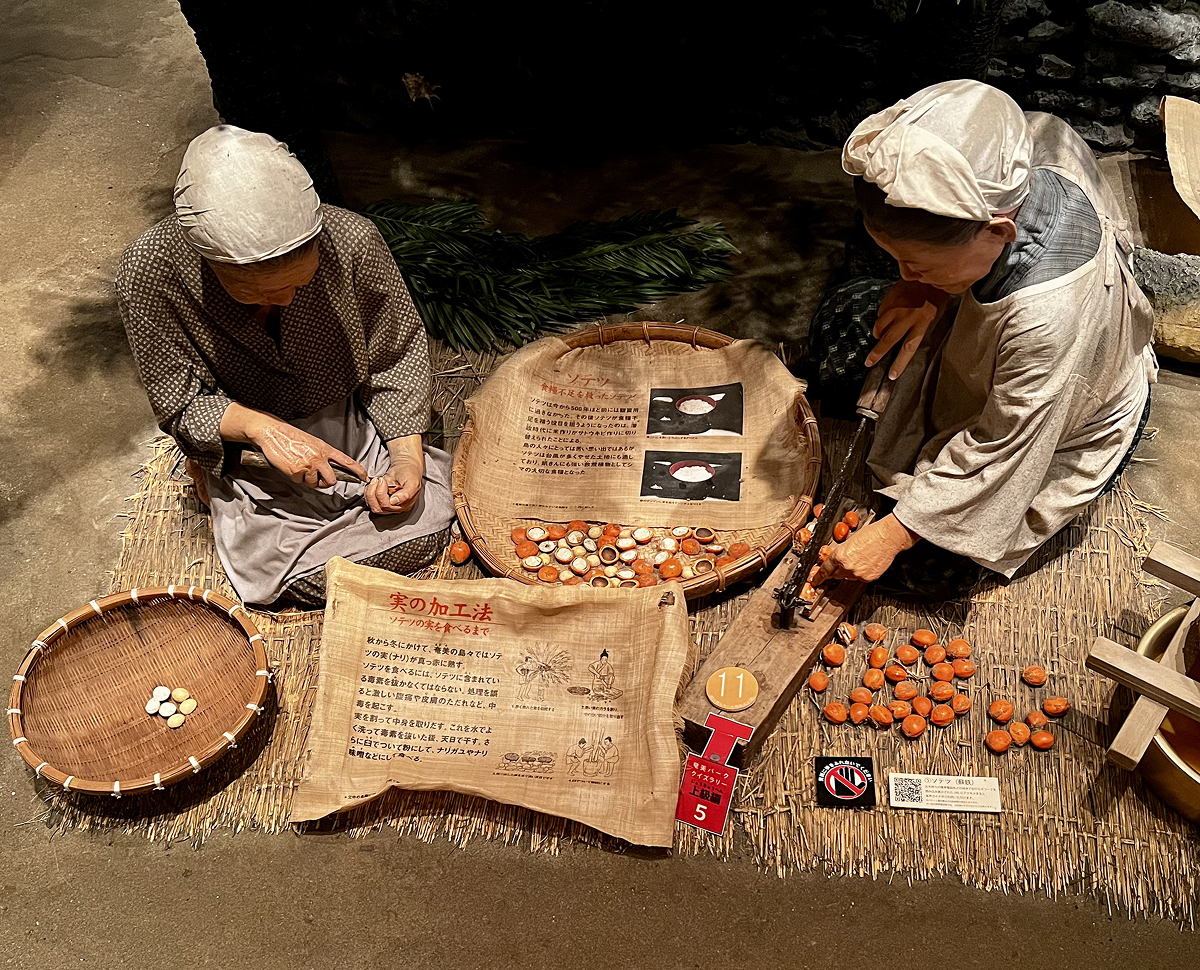
Food scarcity belongs to an earlier stage of this history. During the nineteenth century, toward the end of the Edo period (1603–1868), as sugar production intensified, islanders relied on cycads (蘇鉄), especially in famine years. Cycad became edible only after crushing, soaking and fermentation. Cycad porridge and nari miso (ナリ味噌), a fermented paste, were household-scale techniques for turning the toxic raw material into staple (Sakae 2003: 62–65; Imamura 2010: 41–45). Thus, the market exported sweetness while locals developed ways to survive scarcity. The phrase ‘cycad hell’ (蘇鉄地獄) still circulates as a bitter memory.
Rabbits were also involved in this history of food and survival. The exiled samurai Nagoya Sagenta’s 1850 account records the Amami rabbit as being hunted and used for the treatment of gynecological diseases (Nagoshi 2022: 32), while local memory also recalls the rabbit as food. Cycad processing and rabbit hunting therefore formed part of everyday life alongside the warehouses, roads and ships of the sugar economy.
By the beginning of the twentieth century, human relations with the Amami rabbit had changed considerably, as the species increasingly became valued for its rarity and endemic status. It was designated a Natural Monument in 1921 and a Special Natural Monument in 1963. The rabbit remembered in local practice and the rabbit protected by law are therefore part of the same history of changing relations between people, animals and the island landscape.
Conservation is the latest layer of this history. The changing status of the Amami rabbit makes visible how infrastructures alter relations among species over time. The rat consumed sugar in the warehouses and became part of the work required to protect stored value. Efforts to manage rats and habu snakes later brought mongooses into the island ecology. Mongoose predation placed further pressure on endemic species, including the Amami rabbit, and their eradication became part of restoring native species. Today, the recovering rabbit population must face the roads that cross its habitat, where roadkill is a conservation concern. Infrastructure that once facilitated the movement of cane now demands novel forms of intervention to protect endemic wildlife.
In this way, the Amami rabbit carries different histories of human relations, from hunting and consumption to legal protection and conservation. Meanwhile the rat, as oddkin, shows how the movement and storage of economic value produced ecological relations that, in turn, generated new responsibilities of care, control and repair.
Choose one food item that you encounter in everyday life, such as sugar, rice, coffee, fish, milk or fruit. Trace the infrastructures that allow it to reach you. Include at least three kinds of infrastructure: one material, such as a road, ship, warehouse or refrigeration system; one institutional, such as regulation, certification, taxation or trade policy; and one multispecies relation, such as pests, pollinators, livestock, microbes, soil organisms or endangered species.
Then choose one animal, plant, fungus or microbe that appears around this food infrastructure. First, describe it as a companion species to the infrastructure. Then describe it as oddkin. What changes between the two descriptions? Which term better captures responsibility, dependence, damage or repair?
Fumoto, Sumio. 2011. 奄美の歴史入門:奄美子たちに贈る:奄美はいつから日本なの? 南方新社.
Haraway, Donna J. 2016. Staying with the Trouble: Making Kin in the Chthulucene. Duke University Press.
Imamura, Noriko. 2010. 名越左源太の見た幕末奄美の食と菓子. 南方新社.
Inuzuka, Takaaki. 2004. “はじめに.” In 新薩摩学3―薩摩・奄美・琉球―, edited by 鹿児島純心女子大学国際文化研究センター, 3-6. 南方新社.
Kyūtōryū Sadō [給湯流茶道]. 2023. “ヒト、ネコ、ネズミ…日本列島に最初にきたのは、どの生き物?国立歴史民俗博物館の常設展がアツい.” CUMAGUS, 4 December. https://cumagus.jp/articles/5CSK2AcRokWQOWrwRIoY5
Ministry of the Environment. 2024. “奄美大島における特定外来生物フイリマングースの根絶の宣言について.” 環境省報道発表資料, 3 September. https://www.env.go.jp/press/press_03661.html
Polanyi, Karl. 2001. The Great Transformation: The Political and Economic Origins of Our Time. Beacon Press.
Rest, Matthäus and Dolly Kikon. 2025. “Foodways: An Introduction.” Roadsides 14: 1–7. https://doi.org/10.26034/roadsides-202501401
Roffe, Jon. 2015. Abstract Market Theory. Palgrave Macmillan.
Sakae, Kikugen. 2003. 蘇鉄のすべて. 南方新社.
Tatara, Masaya. 2010. “マングースと外来生物問題.” In 鹿児島環境学Ⅱ―奄美を世界遺産へその課題と展望―, edited by 鹿児島大学鹿児島環境学研究会, 84–111. 南方新社.
White, Thomas and Emilia Róża Sułek. 2022. “Introduction: Infrastructure and the Animal.” Roadsides 8: 1–8. https://doi.org/10.26034/roadsides-202200801
Working with Claudia Eggart and Hasan H. Karrar was highly instructive, and I am grateful for their careful editorial guidance, which significantly improved the quality of this article. I also thank Agnieszka Joniak-Lüthi for her valuable feedback on the final version. This work was supported by the Sasakawa Scientific Research Grant from the Japan Science Society.