This is some text inside of a div block.
Search across the whole Roadsides site


A fish market in Tokyo, a stock exchange in New York, a grain bazaar in Kano, a data marketplace on the dark web—each of these is a market, yet no two are alike. From bazaars and souks to neoliberal malls, online marketplaces and today’s instant delivery platforms, markets and how we popularly think about them are continuously evolving. While “the market” readily appears in economic theory, policy discourse and everyday language, its apparent self-evidence conceals the manifold work required to make exchange possible. This edited collection approaches markets as infrastructures to examine how abstraction and materiality are not opposites but rather mutually sustained through social, technical and political labor.
Neoclassical economics has traditionally relied on efficiency as a key for market success, fueled by pursuit of profit. Yet reliance on rational choice, algorithmic calculation and the proverbial invisible hand leaves a gap between economic abstraction and the actually existing and fundamentally unruly economic life (Peck 2010; Berndt, Peck and Rantisi 2020). Prices require mechanisms of formation; goods require transport; payments require technical systems and legal guarantees; buyers and sellers require a common need and shared understanding of the means of exchange. Actual economic practices are diverse and inventive, often circumventing regulations imposed from above (Simone 2004; Mitchell 2006; Gibson-Graham 2014; Ledeneva 2018a, 2018b). Yet they can also be extractive and exploitative.

Markets are ambiguous, but their alleged autonomy is a chimera produced by capitalist production processes thatrender material and social conditions invisible (Postone 1993). Karl Polanyi’s (1957) concept of embeddedness provides a critical lever to dismantle neoclassical economics’ abstraction by demonstrating that markets are always situated within wider social, legal and political matrices. Inspired by Polanyi’s substantivist critique, economic sociologists argue that rather than measuring grounded economic practices against an impossible textbook standard of frictionless exchange, researchers must map the spatial and institutional variegation of actually existing markets (MacKenzie 2008; Berndt and Boeckler 2009; Callon 2021).
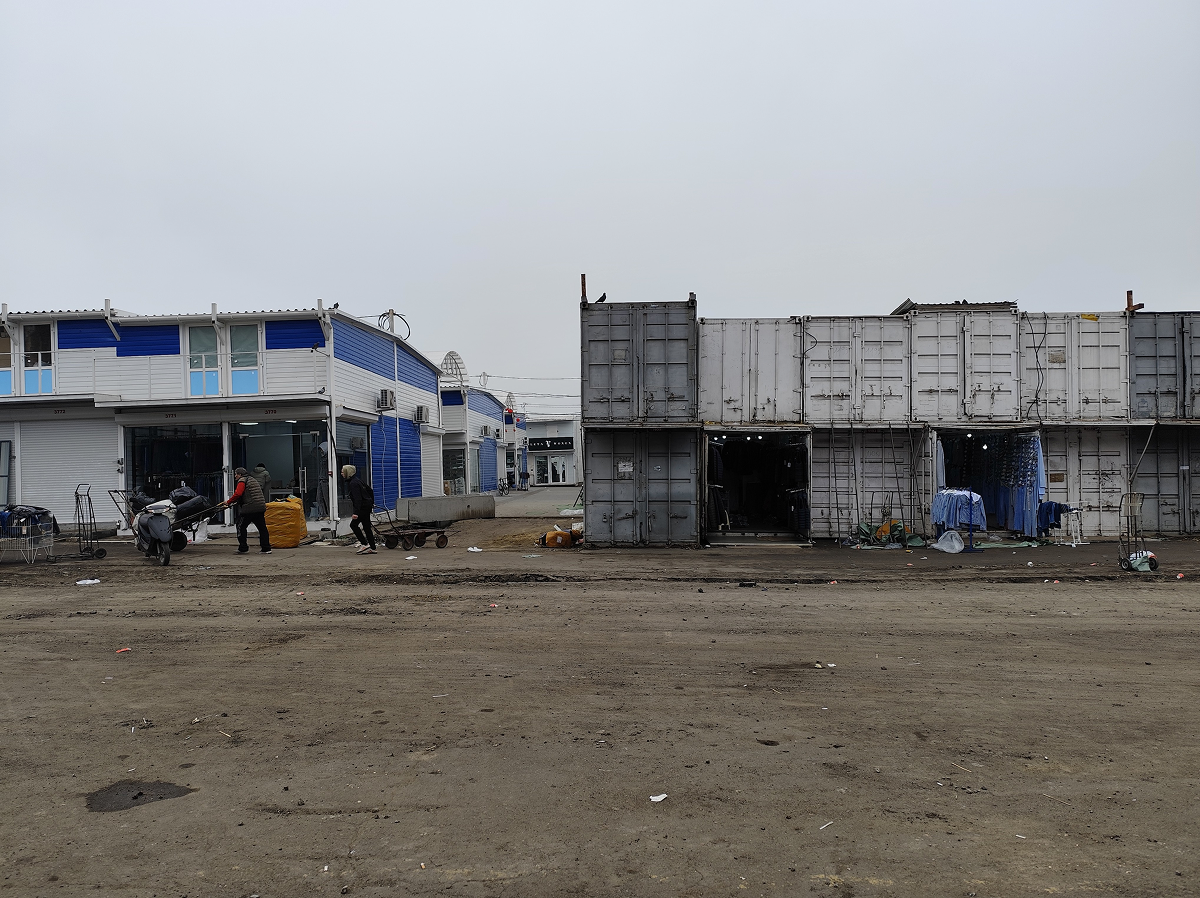
Rethinking markets as infrastructures reconciles circulation with the material, social and technological practices that enable it. In so doing, it challenges development economics’ tendency to treat markets as endpoints of infrastructure (World Bank 1994). Such rethinking thus offers a critical framework for understanding how diverse markets are embedded in colonial histories of extraction, neoliberal urban transformations, and racialized, classed and gendered regimes of labor (Graeter 2022; Fahroji 2025). These interdependencies remain obscured by neoclassical accounts that naturalize markets as expressions of an ostensibly universal human propensity for rational, self-interested accumulation (Dutt et al. 2025). By contrast, the perspective promulgated through the articles in this collection foregrounds how markets are sustained through unequal relations of labor and power, from warehouses, servers and roads to the often-invisible work that keeps them functioning (Anand, Gupta and Appel 2018; Hopkins 2022; Tammisto 2025). It also recasts markets as collective achievements dependent on care, repair and social reproduction, including unpaid and underpaid labor under precarious conditions (Rivera-García 2023; see also Borborah and Johnson this issue). Beyond these material and social relations, markets take shape through immaterial and sensorial webs or relations with their distinct rhythms, rituals, smells, sounds and more-than-human conviviality that situate them within, at the margins of, or in-between the timespaces of ordinary lifeworlds (Perera 2025; see also Pinter, Ren and Wagner this issue).
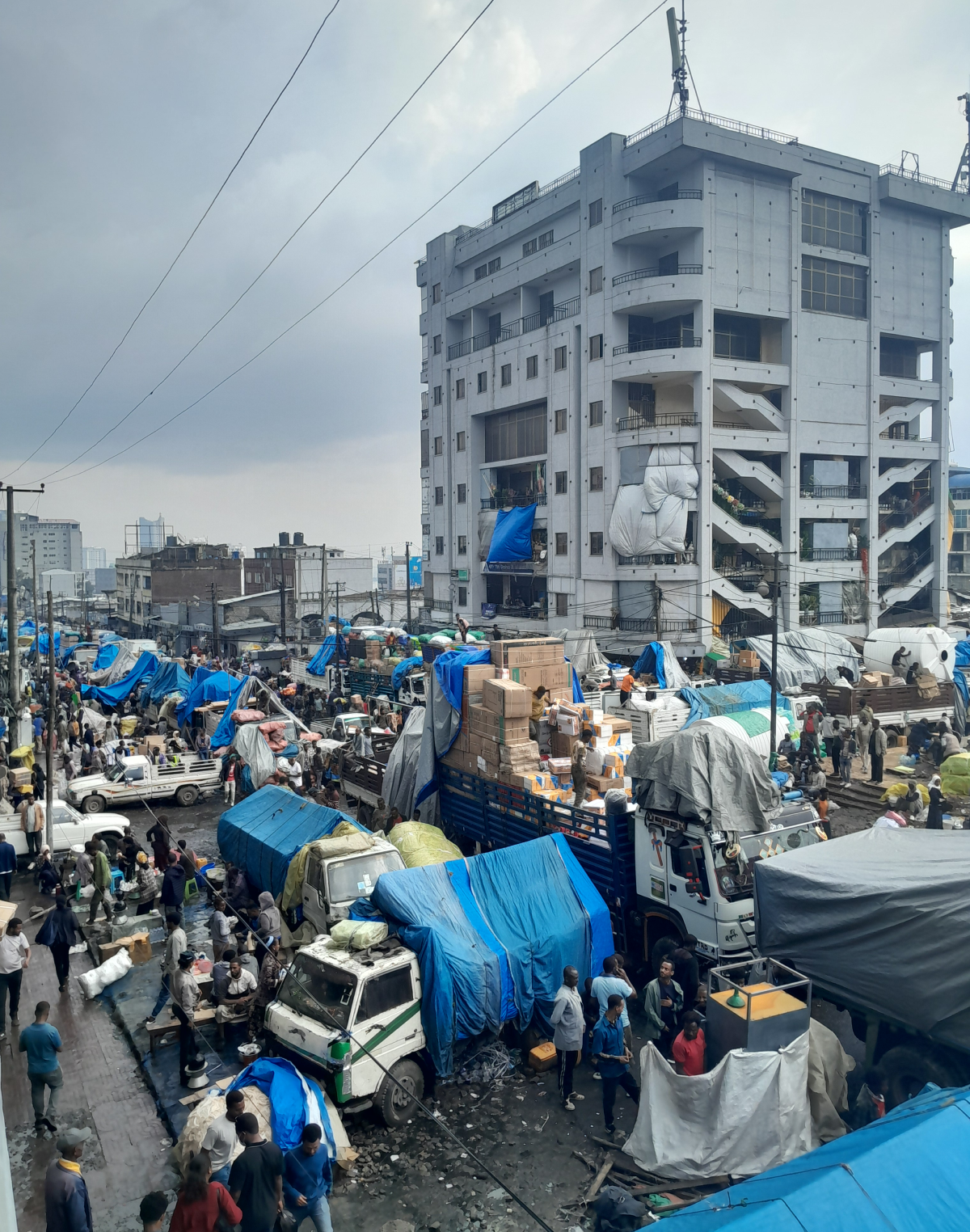
A markets-as-infrastructure perspective approaches markets as embedded in space, place and time, dependent on labor and logistics, and saturated with power and meaning. Legal definitions of property, quality standards, payment platforms, corridors, zones and border controls are all features that shape the functioning of these infrastructures of exchange. But the stability of such structures also depends on shared expectations about returns, institutional protections against uncertainty, and devices that make comparison possible like prices, ratings and certifications (Fligstein 2001; Beckert 2009). Hence, through an infrastructural lens, we suggest a shift of attention from what the market supposedly is to the market as a process, where heterogenous dynamics must constantly be assembled, maintained and negotiated in order for it to function.
Anthropologists of infrastructure have long contended that pipes, wires and roads do more than carry goods or energy; they create social relations, political attachments and moral hierarchies (Collier 2011; Harvey and Knox 2015; Hirsh and Mostowlansky 2022). Infrastructure, as Timothy Mitchell (2014: 437) notes, is a locus of “collective life” that can “enable, transform, or inhibit ways of thinking and living collectively.” The collective element means that every market has a transactional power. Infrastructure helps us see markets as shared projects representing heterogeneous encounters, ingenious adaptation and a network of producers, intermediaries, traders, carriers, officials and clients (Simone 2004; Gago 2017).
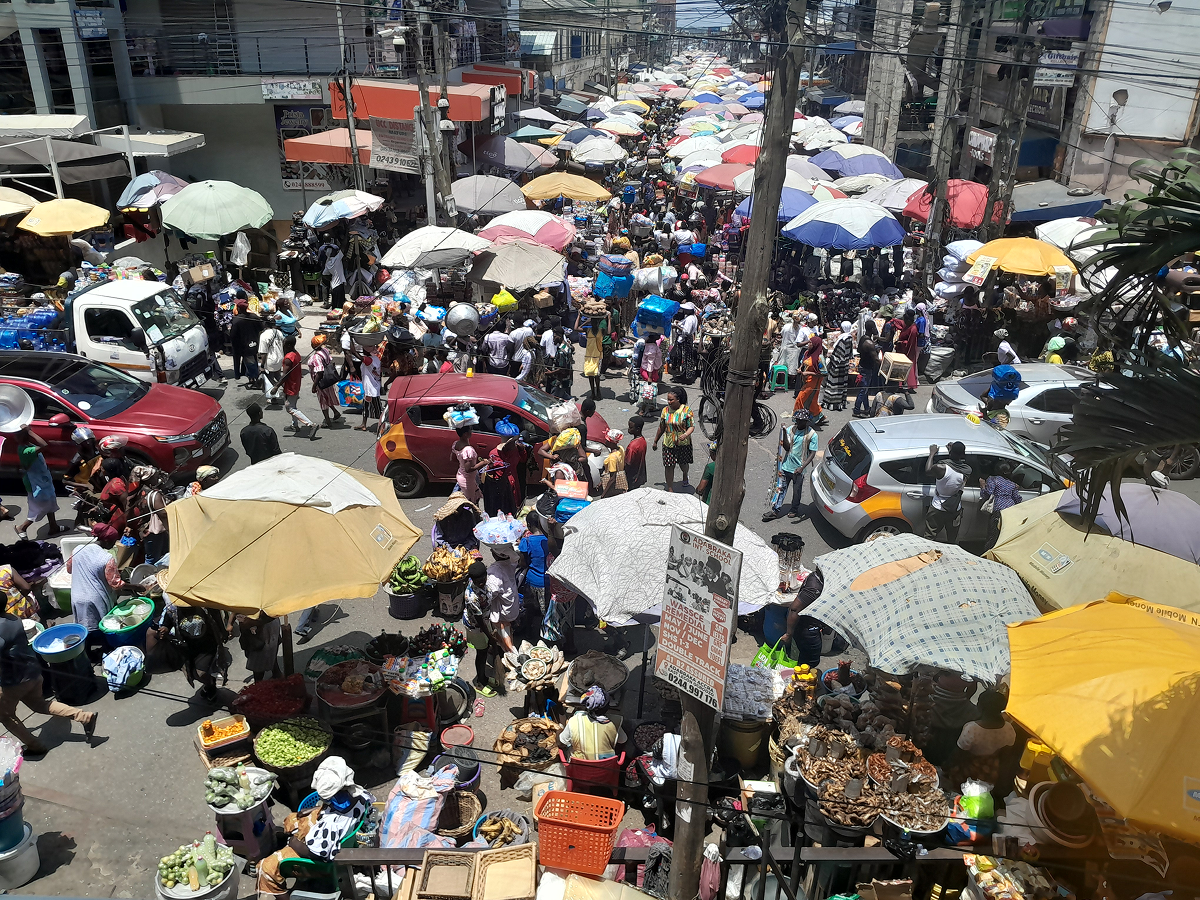
Markets as infrastructure also emphasizes the material labor of maintenance, the politics of breakdown, and the struggle to persist despite threats of eviction. Our approach is interested in the interplay of zoning laws and digital ledgers, the legal regimes and bodily labors that together give shape to the market. Following its fluid (Orrego this issue), wet (Ren this issue), and moral (Borborah and Johnson this issue) composition, an infrastructural lens allows us to ponder alternatives inspired by grounded practices that ask in what ways markets show us how the economy can be organized differently. Associating circulation with frictions, breakdowns and improvisations, all animating economic life, invites comparison as well as questions such as whose markets, where, under what conditions?
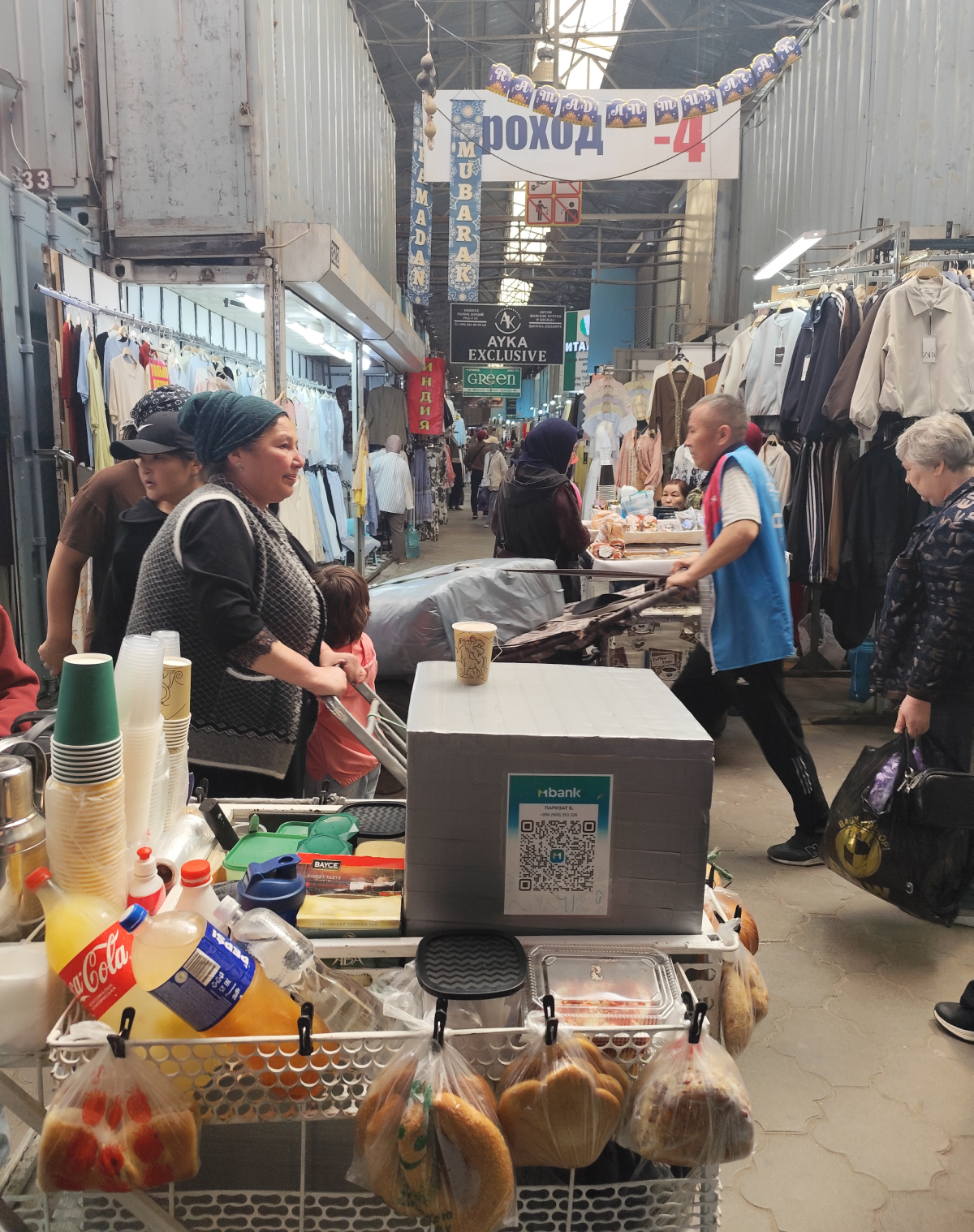
The nine essays in this collection of Roadsides contribute to a markets-as-infrastructure perspective through a wide range of themes such as Artificial Intelligence (AI), class and caste, gender and multispecies interaction. The first set of articles explores human–nonhuman relations. Ahmet Melik Baş brings a multispecies angle to markets and infrastructure in early modern Japan through a cultural history of humans and rodents that resulted from globalized circuits of exchange. Matjaž Pinter follows mushrooms across market sequences in Yunnan, China, illustrating how the temporality of the market is produced by the commodity, in particular around ideas of freshness. Ziqiu Ren foregrounds the viscerality of wet markets in China, exploring aesthetics of death and flesh.
The next set of essays foreground gender and personhood as embedded in commercial practice. Pratisha Borborah describes the role of friendship amongst female market vendors in Assam, India; coming to the market, being in the proximity of other women and sharing news about themselves and their families offers momentary respite from an otherwise patriarchal environment. Lisa Johnson examines how Jamaican women in Montreal, Canada, use partner draw practices to build trust and facilitate financial exchange beyond formal banking systems, framing these collective practices as a form of infrastructural work. Drawing from examples in Europe and North Africa, Lauren B. Wagner focuses on the human associations evidenced in dense sociality and subtle communication that remain intrinsic and essential to marketplace interactions.
Finally, the third set of essays foregrounds the role of physical infrastructure. Shilpa Krishnan discusses how successive plans for the construction of an international seaport empowered development imaginaries amongst a fishing community in southern India, drawing on caste dynamics, technology and extractivism. Santiago Orrego approaches an open-air market as a floating infrastructure, explaining how street vending has spatial logics, appropriates public roads and creates impromptu corridorization in Bogotá, Colombia. Danil Kerimi draws our attention to AI, explaining how it is simultaneously infrastructure that enables exchanges, infrastructure that participates in exchange, and infrastructure that is itself exchanged.
At a time when digital platforms transform markets into apps that increasingly infiltrate our personal and private lives, approaching markets as infrastructural assemblages rather than inevitable or invisible formations becomes an urgent task. It allows us to tackle what it really means to build, maintain and contest markets in the twenty-first century.
Anand, Nikhil, Hannah Appel and Akhil Gupta. 2018. The Promise of Infrastructure. Duke University Press.
Beckert, Jens. 2009. “The Great Transformation of Embeddedness: Karl Polanyi and the New Economic Sociology.” In Market and Society: The Great Transformation Today, edited by Chris Hann and Keith Hart, 38–56. Cambridge University Press.
Berndt, Christian and Marc Boeckler. 2009. “Geographies of Circulation and Exchange: Constructions of Markets.” Progress in Human Geography 33 (3): 535–51.
Berndt, Christian, Jamie Peck and Norma M. Rantisi. 2020. Market/Place: Exploring Spaces of Exchange. Agenda Publishing.
Callon, Michel. 2021. Markets in the Making: Rethinking Competition, Goods, and Innovation. Translated by Olivia Custer, edited by Martha Poon. Zone Books.
Collier, Stephen J. 2011. Post-Soviet Social: Neoliberalism, Social Modernity, Biopolitics. Princeton University Press.
Dutt, Devika, Carolina Alves, Surbhi Kesar and Ingrid Harvold Kvangraven. 2025. Decolonizing Economics. Polity Press.
Fahroji, Fahmi R. 2025. “Ambivalence and Toxic Extractivism in Indonesia.” Roadsides 13: 23–30. https://doi.org/10.26034/roadsides-202501304
Fligstein, Neil. 2001. The Architecture of Markets: An Economic Sociology of Twenty-First-Century Capitalist Societies. Princeton University Press.
Gago, Verónica. 2017. Neoliberalism from Below: Popular Pragmatics and Baroque Economies. Duke University Press.
Gibson-Graham, J. K. 2014. “Rethinking the Economy with Thick Description and Weak Theory.” Current Anthropology 55 (9): 147–53.
Graeter, Stefanie. 2022. “Logics of Metal Containment.” Roadsides 7: 75–82. https://doi.org/10.26034/roadsides-202200711
Harvey, Penelope and Hannah Knox. 2015. Roads: An Anthropology of Infrastructure and Expertise. Cornell University Press.
Hirsh, Max and Till Mostowlansky. 2022. Infrastructure and the Remaking of Asia. University of Hawai’i Press.
Hopkins, Debbie. 2022. “Buffering as Everyday Logistical Labour.” Roadsides 7: 51–58. https://doi.org/10.26034/roadsides-202200708
Ledeneva, Alena. 2018a. The Global Encyclopaedia of Informality, Volume 1. UCL Press.
Ledeneva, Alena. 2018b. The Global Encyclopaedia of Informality, Volume 2. UCL Press.
MacKenzie, Donald. 2008. Material Markets: How Economic Agents Are Constructed. Oxford University Press.
Mitchell, Timothy. 2014. “Introduction: Life of Infrastructure.” Comparative Studies of South Asia, Africa and the Middle East 34 (3): 437–39. https://doi.org/10.1215/1089201X-2826013
Peck, Jamie. 2010. Constructions of Neoliberal Reason. Oxford University Press.
Polanyi, Karl. 1957. The Great Transformation. Beacon Press.
Perera, Meghal. 2025. “Thin Ice.” Roadsides 14: 20–26. https://doi.org/10.26034/roadsides-202501403
Postone, Moishe. 1993. Time, Labor, and Social Domination: A Reinterpretation of Marx’s Critical Theory. Cambridge University Press.
Rivera-García, Sofia. 2023. “Bodily Infrastructures of Care.” Roadsides 9: 17–22. https://doi.org/10.26034/roadsides-202300903
Simone, AbdouMaliq. 2004. “People as Infrastructure: Intersecting Fragments in Johannesburg.” Public Culture 16 (3): 407–29.
Tammisto, Tuomas. 2025. “Roads, Marketplaces and Plantations.” Roadsides 14: 50–60. https://doi.org/10.26034/roadsides-202501407
World Bank. 1994. World Development Report, 1994. Infrastructure for Development. World Bank. https://openknowledge.worldbank.org/server/api/core/bitstreams/fa6ff9e5-1458-57b2-a0fa-cbcaca85ef51/content
We would like to thank all the authors, the Roadsides editorial team and the following reviewers for their work, support and inspiring contributions: Waqar Zaidi, Rune Steenberg, Ameem Lutfi, Jiraporn Laocharoenwong, Chakad Ojani, Susanne Fehlings, Nida Kirmani, Emily Yeh, Henryk Alff and Mechthild von Vacano.