This is some text inside of a div block.
Search across the whole Roadsides site


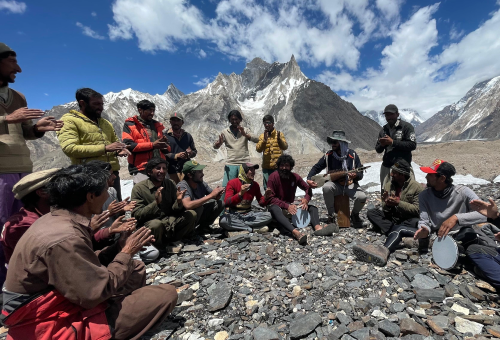
The ice-capped Nevado Huaytapallana is a thing of pride for the people of Peru’s Mantaro Valley and its principal city of Huancayo, but it is also a source of distress. In late July, marking the beginning of the region’s month-long Santiago Festival, hundreds to thousands of individuals from the region and across Peru caravan to the base of the mountain. These Santiagueros, often led by what locals refer to as shamans or healers, dance to the music of saxophone orchestras, the women wearing traditional floral skirts and the men in sombreros adorned with the mountain’s iconic flowers. They come to the Huaytapallana, which translates from Quechua to ‘the place one goes to gather flowers’, to leave offerings to the Apus—mountain deities—in exchange for good luck in the year to come. These oblations traditionally include materials like coca leaves, alcohol and fruits, but as the practice has grown in recent decades, it increasingly involves items containing plastic, glass and candle wax. In addition to the many empty bottles and cans left by participants, this has resulted in a considerable accumulation of waste on the flanks of the mountain and even on its glaciers (Maldonado-Oré and Custodio 2020).
The Santiago season of 2025, however, was different. As July came around, trucks began circulating the city broadcasting the following message over loudspeakers:
The Huaytapallana is a source of life. [It] provides water to all the city of Huancayo. The water we drink, and that irrigates our fields is born from this glacier. But today, the Huaytapallana cries for help. Every time we visit it, we leave trash in its lakes, provoke wildfires with our candles, tear apart vegetation, and animals die due to our garbage. This year, don’t go up to the Huaytapallana. Let’s protect this precious place and leave this heritage for our future generations …
Heard from within the city and along the road towards the Huaytapallana Regional Conservation Area (ACR-H), this broadcast was part of a campaign led by the regional government of Junín to prevent the pilgrimage. Previous efforts to control festivities inside the ACR-H had failed to curb the accumulation of visitors and their waste. New, stricter measures in 2025 would allow the festival to continue throughout Huancayo and the Mantaro Valley but prohibit the initial activities concentrated within the protected area’s boundaries. Entry to the ACR-H was closed to visitors without permits and, as late July approached, government officials were stationed at multiple points along the entry road, ensuring that only vehicles destined for Pariahuanca, the district across the mountain, were granted passage.
The ban on in-situ glacier worship—motivated by a desire to protect essential water resources and the natural environment—offers a glimpse into the layered dynamics of this landscape. In examining the 2025 prohibition, a network of sociocryospheric relations (Carey and Moulton 2023) emerges linking the region’s physical and cultural infrastructure. Here, the sociocryospheric lens invites analysis of the differing impacts of, responsibilities for and knowledge about ice loss. In the Huaytapallana range, where the impacts of glacier retreat are widely visible, responsibilities and knowledges remain contested.
Few homes in Huancayo receive water 24 hours per day and many households rely on tanks to store water for daily shutoffs (Mark et al. 2017). Currently, 60 percent of the city’s supply is drawn from the Shullcas River, which flows from the icy peaks of the Huaytapallana. The remaining 40 percent is pumped from various groundwater wells. Their dependence on the Shullcas River creates among the Huancayo public a perception of reliance on glaciers, ancient ice-flows that have receded by more than 70 percent since the early 1960s (INAIGEM 2023). Although the exact quantity of Huancayo’s water that derives directly from glaciers—as opposed to groundwater or other sources—is likely overestimated (Somers et al. 2019), hydrological measurements from 2024–25 indicate strong dependence on the glacial headwaters throughout the dry season. Despite covering less than 30 percent of watershed area, these headwaters provide about half of the water that reaches the treatment plant during June through August. Preserving the integrity of the headwaters—glacial and otherwise—is therefore essential to the continuity of Huancayo’s drinking water.
Within this hydrological context, the motivation behind the closure of the ACR-H would appear legitimate. Indeed, usually citing issues related to trash, most residents of Huancayo and highland villages with whom I spoke appear to understand or even support the policy. One authority figure in a village near the park entrance expressed strong support:
They leave plastics; they leave bottles; they leave glass. That has left a disaster … [Thousands of people] come and leave an immense mess … And this year [the shamans] didn’t go, and it’s fine. There’s not much garbage. Not much pollution … this should be permanent.
However, the scientific basis of the policy weakens when it is examined more closely.
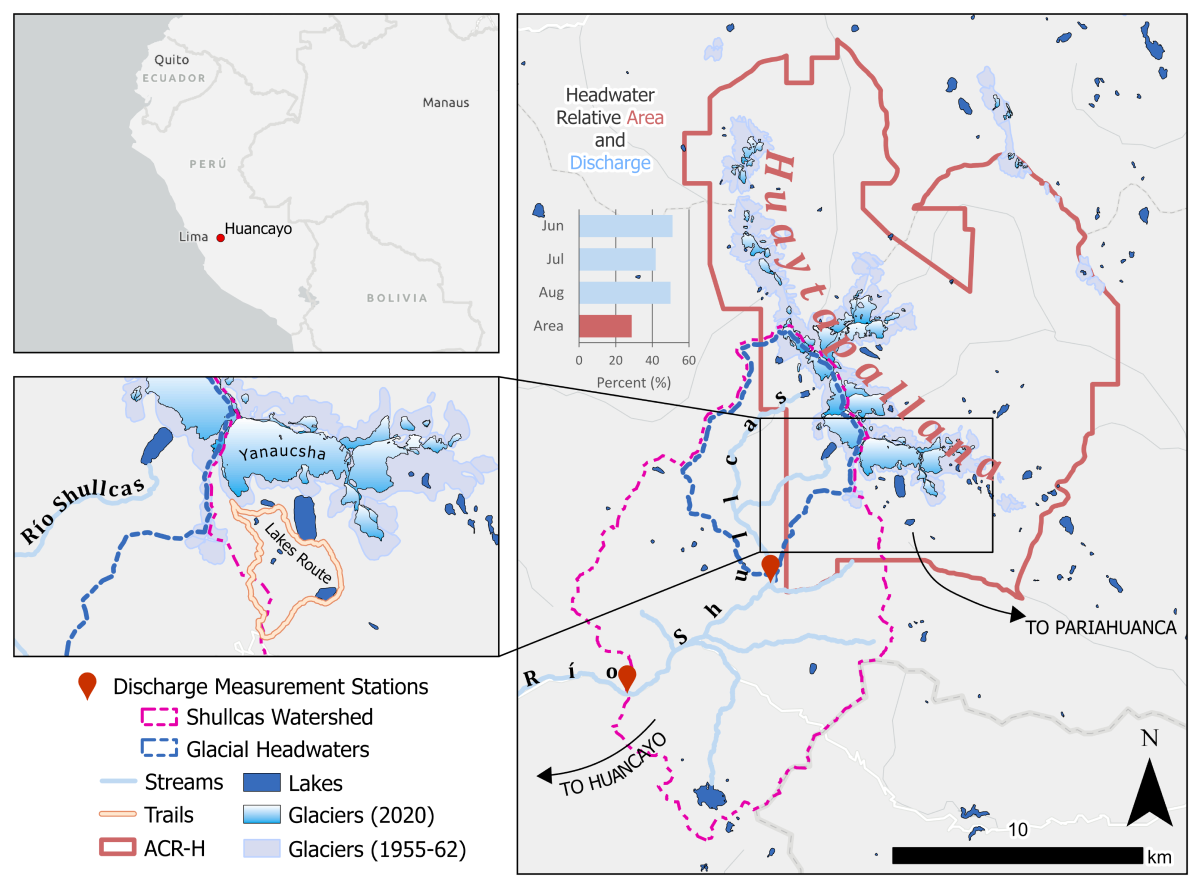
Most pilgrimage-associated contamination accumulates outside of the Shullcas watershed. Instead, it concentrates along the Lakes Route, a popular tourist circuit leading to Yanaucsha Glacier, whose waters flow away from Huancayo. Due to the presence of a gate that has prevented unauthorized automobile access to the Shullcas headwaters since 2017, Santiago Festival activities that do take place within the watershed generally occur away from glaciers and lakes. Despite the success of this previous intervention, government discourse maintains a strong focus on glaciers to legitimize the total closure of the ACR-H. Beyond the public broadcast quoted above, signage links the closure policy to glacier protection, emphasizing this issue over the general problem of litter. For instance, a banner that covered the locked entrance to the Lakes Route during July 2025 declared “the indeterminant closure of the [ACR-H] due to accelerated glacier retreat and exposure of the population to dangers associated with glacier melt and the reduction of water availability. IT IS NOT PERMITTED TO ENTER!”
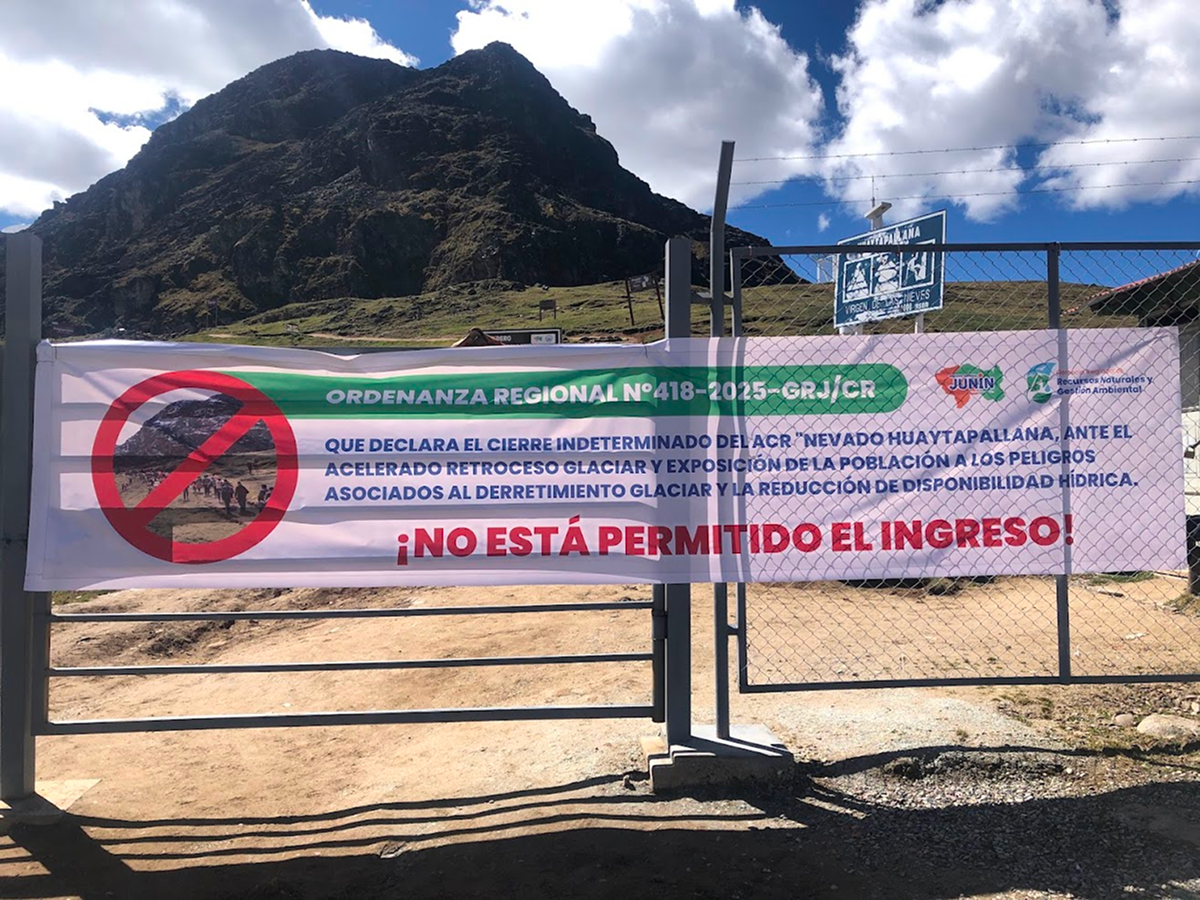
Although it is probable that local contamination influences the glacier’s surface melting rates, the long-term retreat witnessed at this site most likely follows the temperature-dominated trend linked to anthropogenic warming in the tropical Andes writ large (Sicart et al. 2008; Shutkin et al. 2025). Government discourse linking the pilgrimage activities to glacier reduction and water resource loss is therefore misleading in two senses. First, most littering no longer occurs within the Shullcas headwaters. Second, rather than leveraging the widely acknowledged issue of contamination in and of itself, government discourse advances poorly substantiated claims connecting the issue to glacier loss.
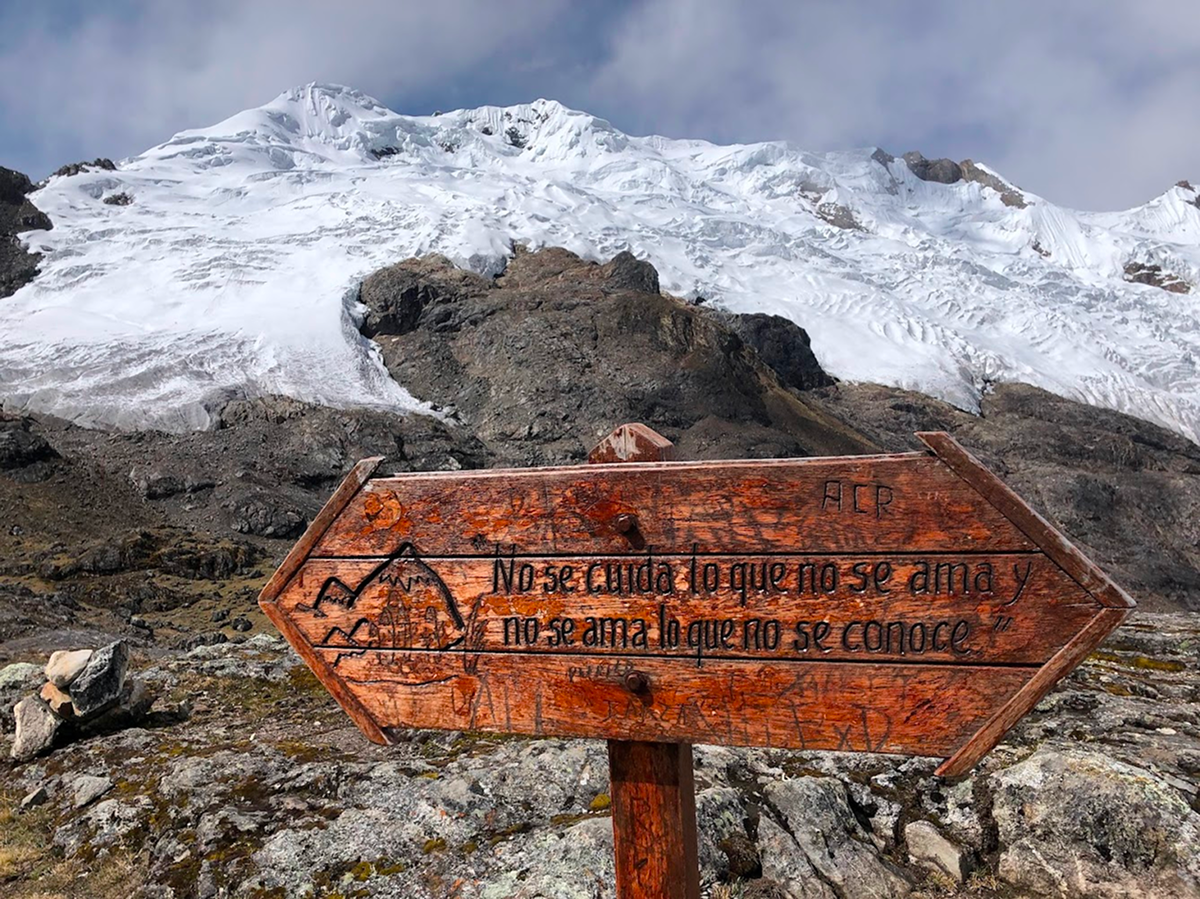
Even without a firm scientific relation to glaciers, the closure of the ACR-H is couched within two culturally acceptable frameworks that are shared by those who make the annual pilgrimage to the Huaytapallana. First, the regional government recognizes the life-giving capacity—understood as water resources—of the Huaytapallana, and hence the necessity to protect it for future generations. Second, the closure policy is strongly grounded in the argument that local human activity impacts the mountain, and vice versa.
I contend that these same principles, albeit translated through a less technocratic lens, motivate the pilgrimage itself. Although the intensity of the practice is a modern neo-traditional phenomenon (Paerregaard 2023), it stems from the pre-Incan worship of the deity Huallallo Carhuancho, who is said to reside trapped within the Huaytapallana (Villanes Cairo 1978). Since the Spanish conquest, Huallallo, who is associated with fire, fertility and husbandry, has syncretized with Santiago, the Catholic patron associated with similar traits (Matayoshi Matayoshi 2009). In local Huanca (also spelled Wanka) culture, the Santiago festival is closely connected with husbandry. Offerings given to the mountain are traditionally answered with healthy and bountiful cattle during the year to come but have evolved to include modern requests as well.
Today’s pilgrimage therefore remains grounded in a perception of the Huaytapallana as provider, a perspective that is bolstered by the city’s hydrological precarity. It also affirms that communities retain a reciprocal relationship with the Huaytapallana that is maintained through the payment of offerings. In short, the mountain provides vital resources, but only if treated with respect. Paradoxically, the practice of leaving offerings has evolved such that many view it as disrespectful. Those who prefer to ban the pilgrimage are thus motivated by the same perspective as its practitioners.
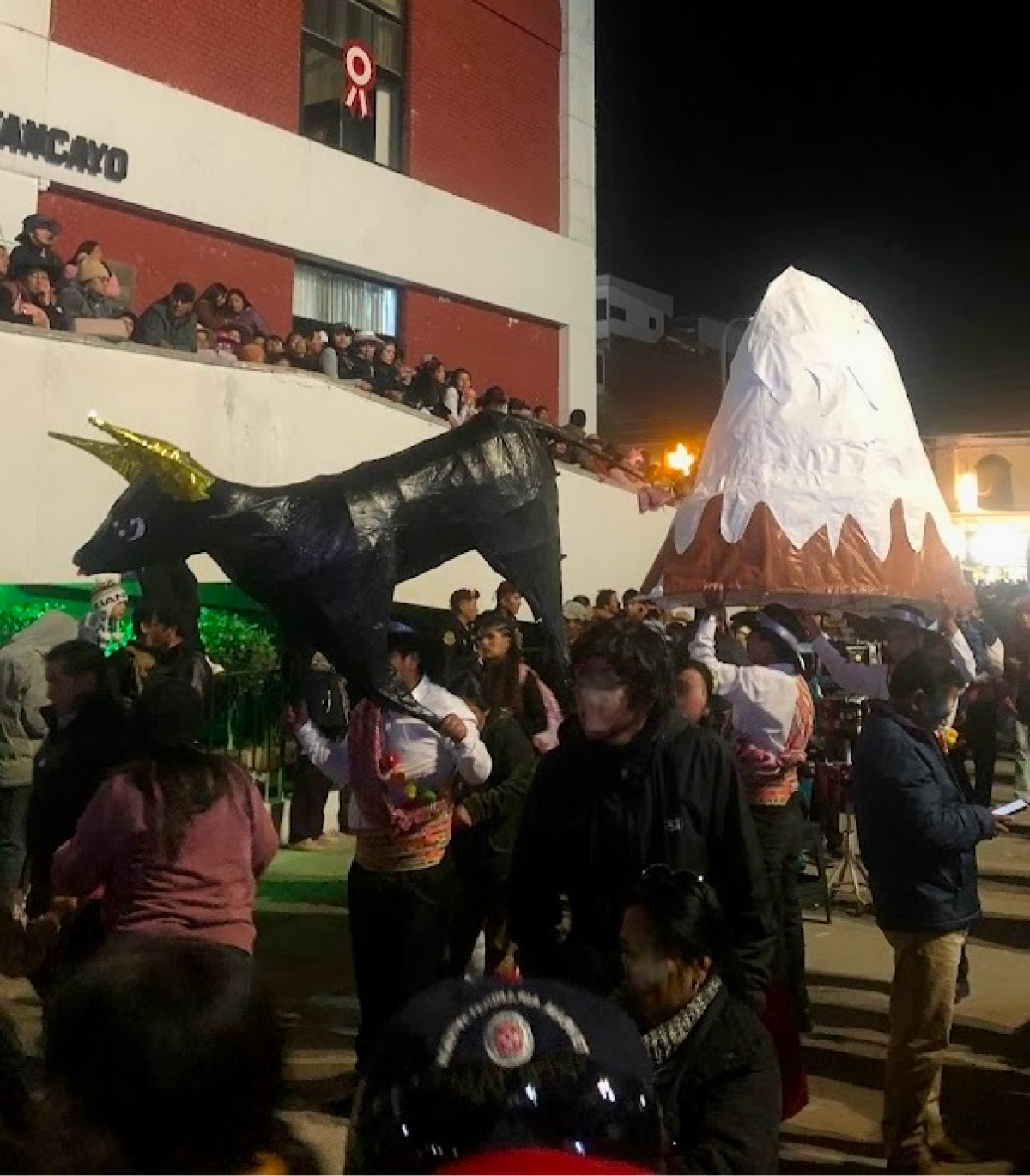
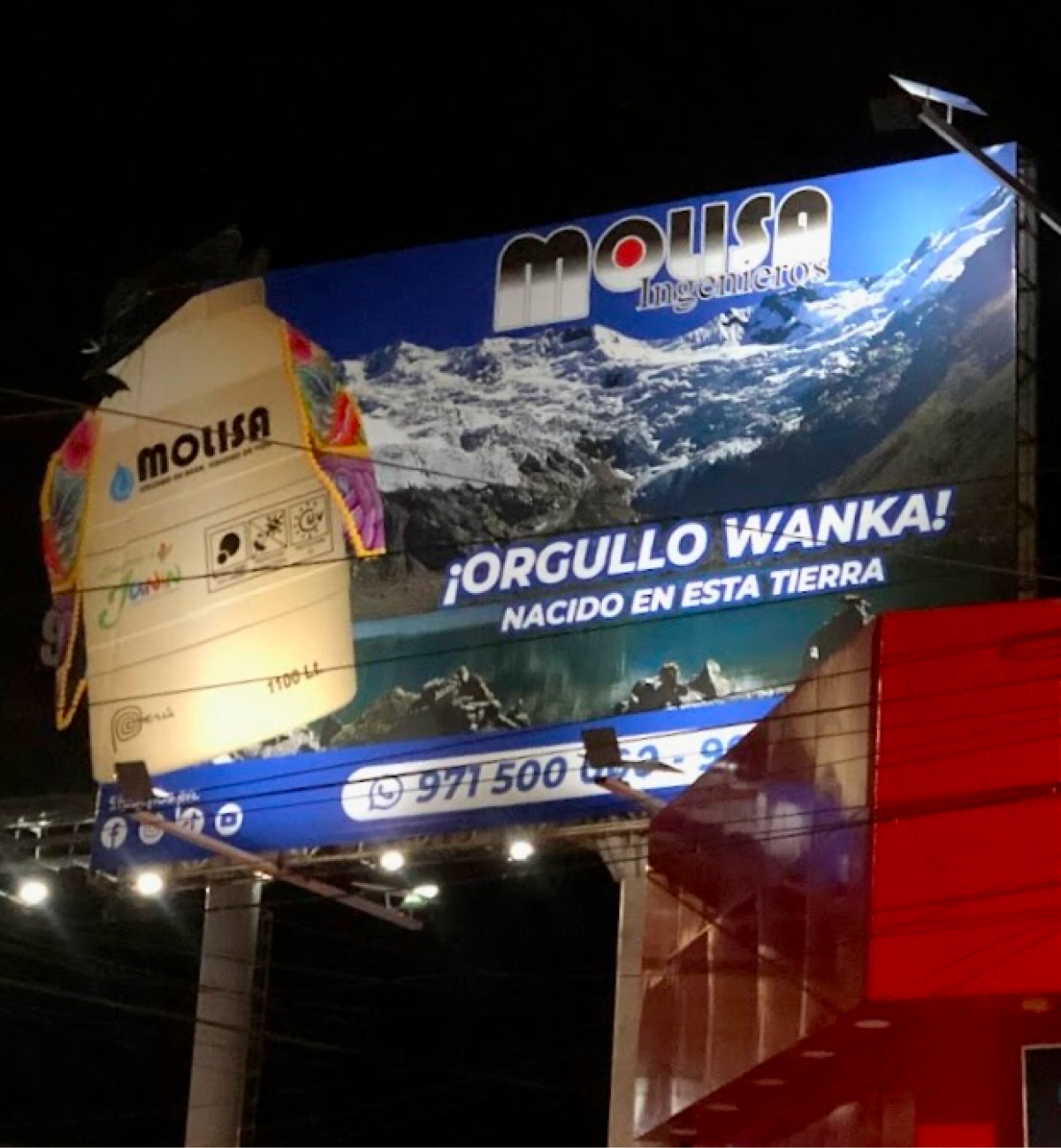
The ban was largely successful. In 2025, a smaller pilgrimage occurred at a site outside the ACR-H where participants could see the Huaytapallana from a distance. Due to popular recognition of the contamination issue and concern over water resources in Huancayo, the crackdown received little public backlash. However, a small minority continued entering illegally to perform offerings closer to the mountain. Compared to previous levels, this is hardly significant, but it highlights the fact that conflict between cultural and managerial priorities persists to some extent. Whether this will grow in significance or fade remains to be seen. It is clear, however, that as in other icy regions (e.g. Gagné 2024), contested representations of glacier reciprocity will continue informing the ways people interact with and choose to intervene in the changing cryosphere (Stuhl 2016).
Carey, Mark and Holly Moulton. 2023. “Inequalities of ice loss: A framework for addressing sociocryospheric change.” Annals of Glaciology 1 (10): 1–10. https://doi.org/10.1017/aog.2023.44
Gagné, Karine. 2024. “Vital Bodies: Tales of Intimate Encounters with Climate Change in Icy Ecologies.” Social Anthropology/Anthropologie Sociale 32 (1): 13–29. https://doi.org/10.3167/saas.2024.320103
Maldonado-Oré, Edith M. and Maria Custodio. 2020. “Visitor environmental impact on protected natural areas: An evaluation of the Huaytapallana Regional Conservation Area in Peru.” Journal of Outdoor Recreation and Tourism 31: 100298. https://doi.org/10.1016/j.jort.2020.100298
Mark, Bryan G., Adam French, Michael Baraer, Mark Carey, Jeffrey Bury, Kenneth R. Young, Molly H. Polk, Oliver Wigmore, Pablo Lagos, Ryan Crumley, Jeffrey M. McKenzie and Laura Lautz. 2017. “Glacier loss and hydro-social risks in the Peruvian Andes.” Global and Planetary Change 159: 61–76. https://doi.org/10.1016/j.gloplacha.2017.10.003
Matayoshi Matayoshi, Nicolas. 2009. “Huaytapallana, el dios de los Huancas.” Agua: Revista de Cultura Andina 4 (2): 475–516.
Paerregaard, Karsten. 2023. Andean Meltdown: A Climate Ethnography of Water, Power, and Culture in Peru. University of California Press.
Shutkin, Tal Y., Bryan G. Mark, Nathan D. Stansell, Rolando Cruz Encarnación, Henry H. Brecher, Zhengyu Liu, Bidhyananda Yadav and Forrest S. Schoessow. 2025. “Modeling the impacts of climate trends and lake formation on the retreat of a tropical Andean glacier (1962–2020).” The Cryosphere 19 (10): 4835–53. https://doi.org/10.5194/tc-19-4835-2025
Sicart, Jean E., Regine Hock and Delphine Six. 2008. “Glacier melt, air temperature, and energy balance in different climates: The Bolivian Tropics, the French Alps, and northern Sweden.” Journal of Geophysical Research: Atmospheres 113: D24113. https://doi.org/10.1029/2008JD010406
Somers, Lauren D., Jeffrey M. McKenzie, Bryan G. Mark, Pablo Lagos, Gene-Hua C. Ng, Andrew D. Wickert, Christian Yarleque, Michel Baraer and Yamina Silva. 2019. “Groundwater Buffers Decreasing Glacier Melt in an Andean Watershed—But Not Forever.” Geophysical Research Letters 46 (22): 13016–26. https://doi.org/10.1029/2019GL084730
Stuhl, Andrew. 2016. Unfreezing the Arctic: Science, Colonialism, and the Transformation of Inuit Lands. The University of Chicago Press.
Villanes Cairo, Carlos. 1978. Los Dioses Tutelares de los Wankas. Editorial San Fernando.
Thank you to Paromita Bathija, Gabriel Zeballos Castellon, Bryan Mark, Galen Murton and Anna-Maria Walter for providing insightful feedback on drafts of this essay. This research was funded by the Fulbright-Hays Doctoral Dissertation Research Abroad program, grant number P022A240020.