This is some text inside of a div block.
Search across the whole Roadsides site


Ice is consequential always, not only through its melting.
In my artmaking and worldview, I see glaciers as verbs—as animate living, breathing, communicating beings.[1] This informs how I participate with my home in Alaska, in my relationships and surroundings, and in experiential learning processes. As part of my Master’s degree in Arctic and Northern Studies at the University of Alaska-Fairbanks, I curated dis/comfort in the North to examine how comfort and discomfort materialize in Northern-based contemporary art. Through a call for submissions and by invitation, an assemblage of artists considered their own comfort and reflected on the broader contexts of how dis/comfort shapes living in and visiting the North.
As a framework and concept for the exhibition, dis/comfort materialized by attempting to define colonial comfort, where privilege can undermine comfort for marginalized groups, or perpetuate comfort for certain bodies (Ahmed 2013; Dickenson 2022). Comfort and discomfort are multimodal and have different meanings and effects depending on identity, worldview, social status and physical location. For example, comfort could mean exerting control over land and marginalized groups through colonial or political power. Or, comfort could mean the freedom to move through one’s homeland and territories in an unfettered way. If comfort is informed by identity and worldview, where do viewpoints, imaginings and feelings about the North split and merge, and for whom does this happen?[2] How does comfort and discomfort shape what is unknown or misunderstood about the Arctic? As an analytical and aesthetic tool, dis/comfort offers some ways of answering these questions.
dis/comfort interrogates how one may be responding to and/or experiencing comfort or discomfort at any given time. In the selected artworks, contemporary and relational art by both insiders (inhabitants of Northern regions) and outsiders (visitors or newcomers from Southern locations) emerge as complex ‘anti-spectacle’ stories of ice.[3] Anti-spectacle ice relates to or writes towards ice as family and home, as social, or messy and complicated (Smith 2025). The consequentiality and complexity of ice and ice narratives underpin dis/comfort as an analytic and aesthetic framework.
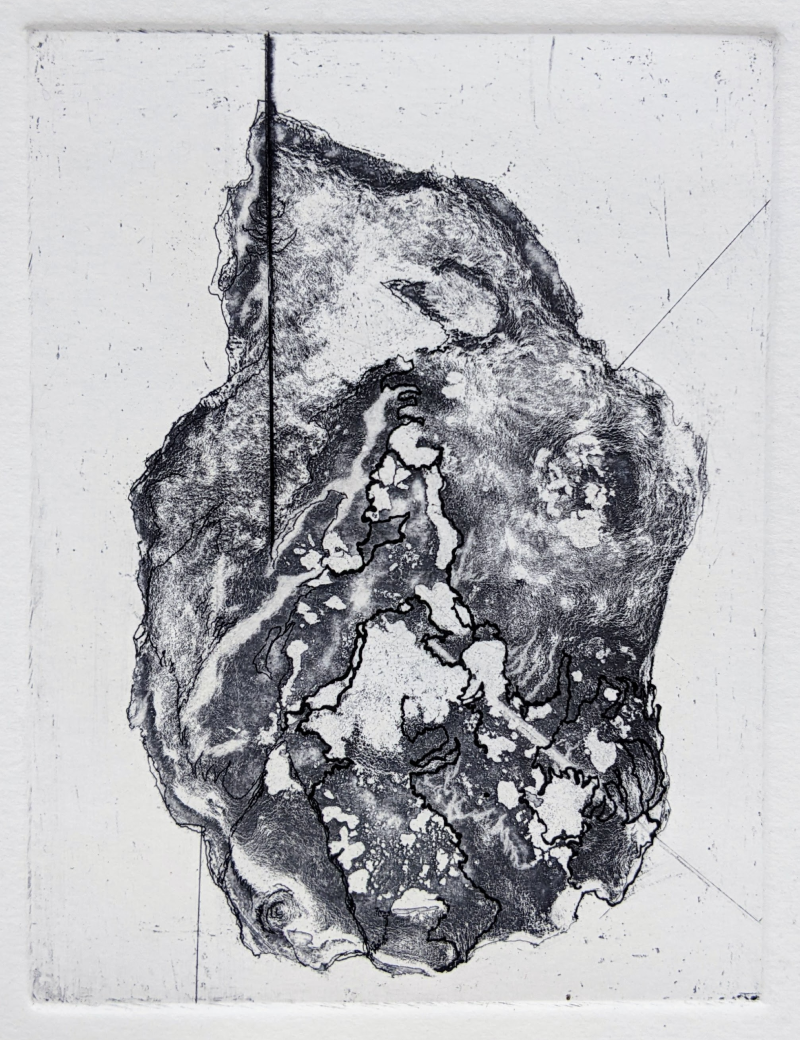
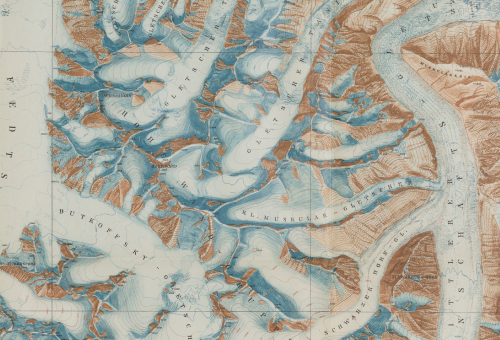
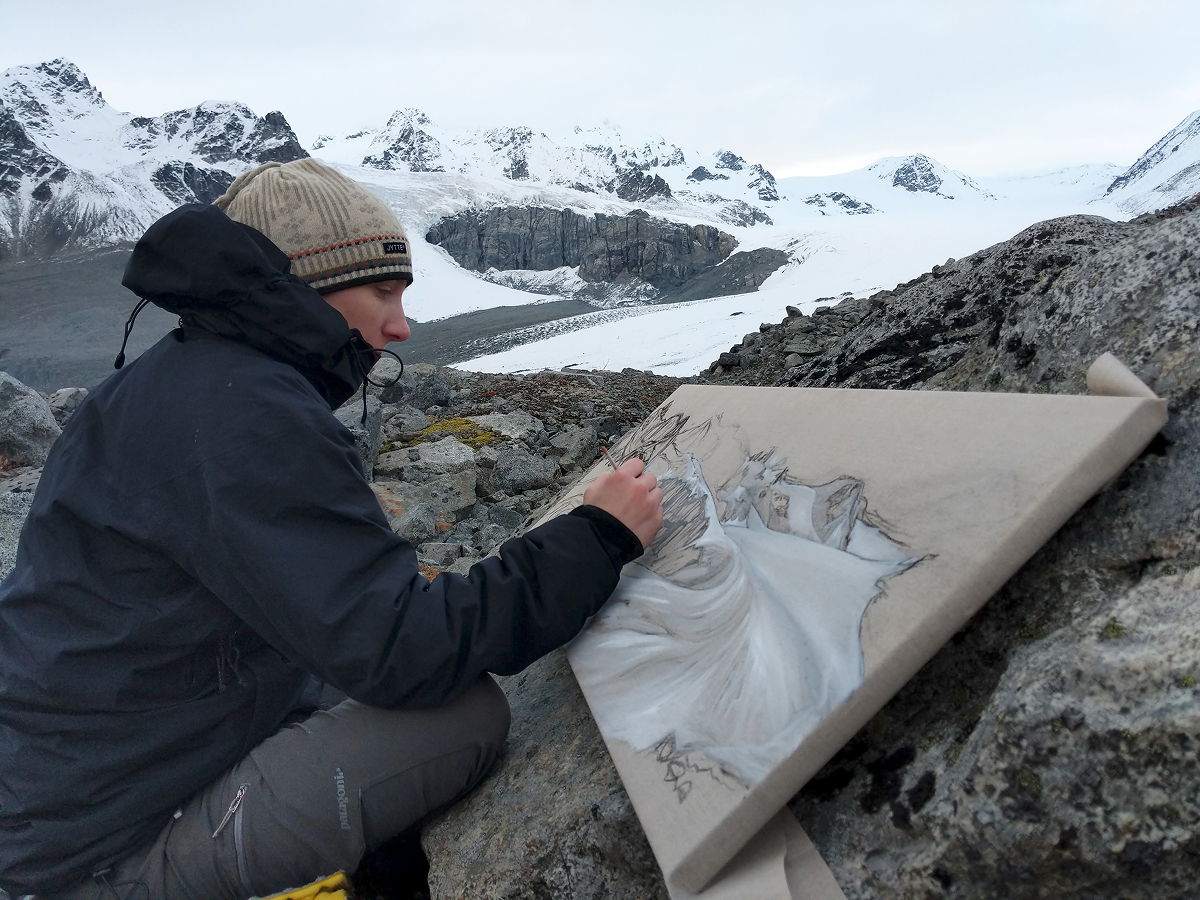
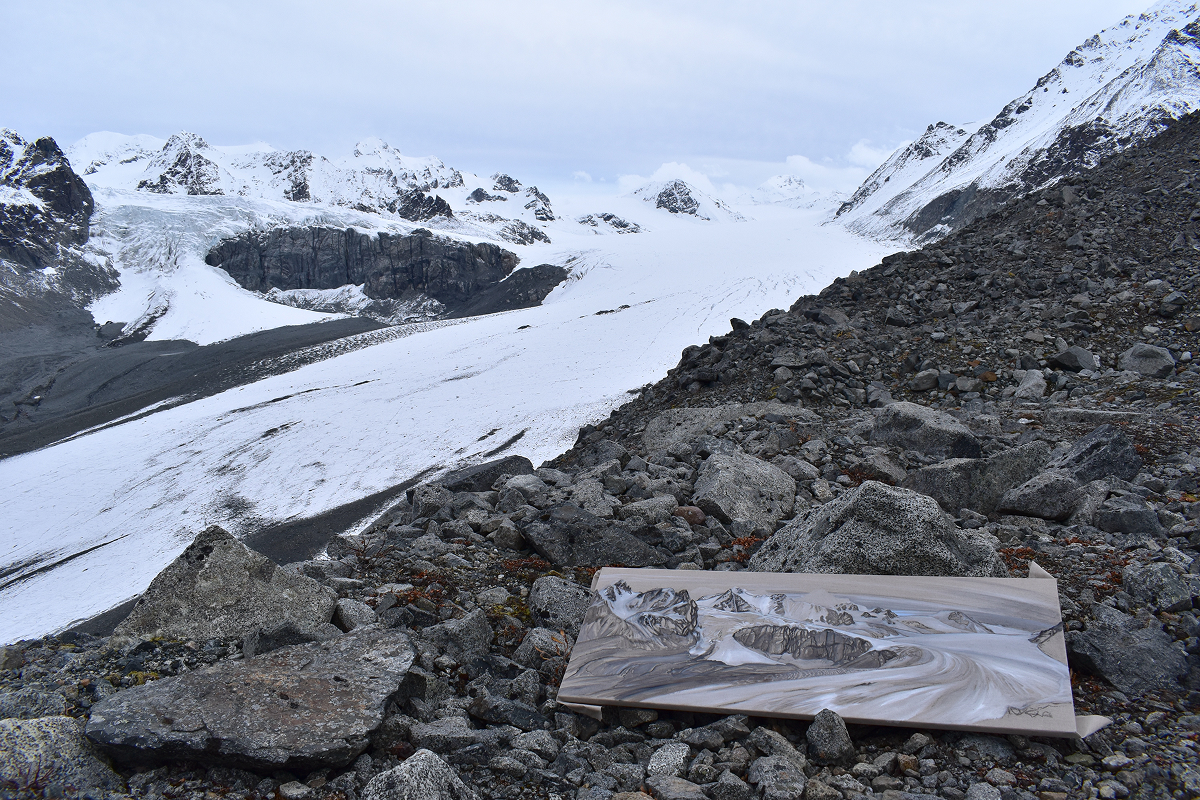
dis/comfort as an exhibition also became an analytical tool to interrogate artistic practices by outsiders that imagine the Circumpolar North from a distance or through brief encounters. Within this framing, the exhibition became a multidimensional tool for considering how one may be responding to and/or experiencing comfort or discomfort at any given time in Northern contexts, and in relation to land and ice. This is visible in the activated worlds found in The Grammar of Ice, a zinc etching by Italian-Scottish artist Anna Berrino. Familiarity and relationship with ice is felt through careful attention to her processes, where nuance translates as layers of memory. Some layers are well defined, while others are subtle, muted, yet still have shape and presence. Similarly, Alaska-based painter Klara Maisch gestures towards place-based care, deep listening and layered conversations in Mass-Balance, from her repeat C'ulc'ena' Łuu' (Gulkana Glacier) painting series.
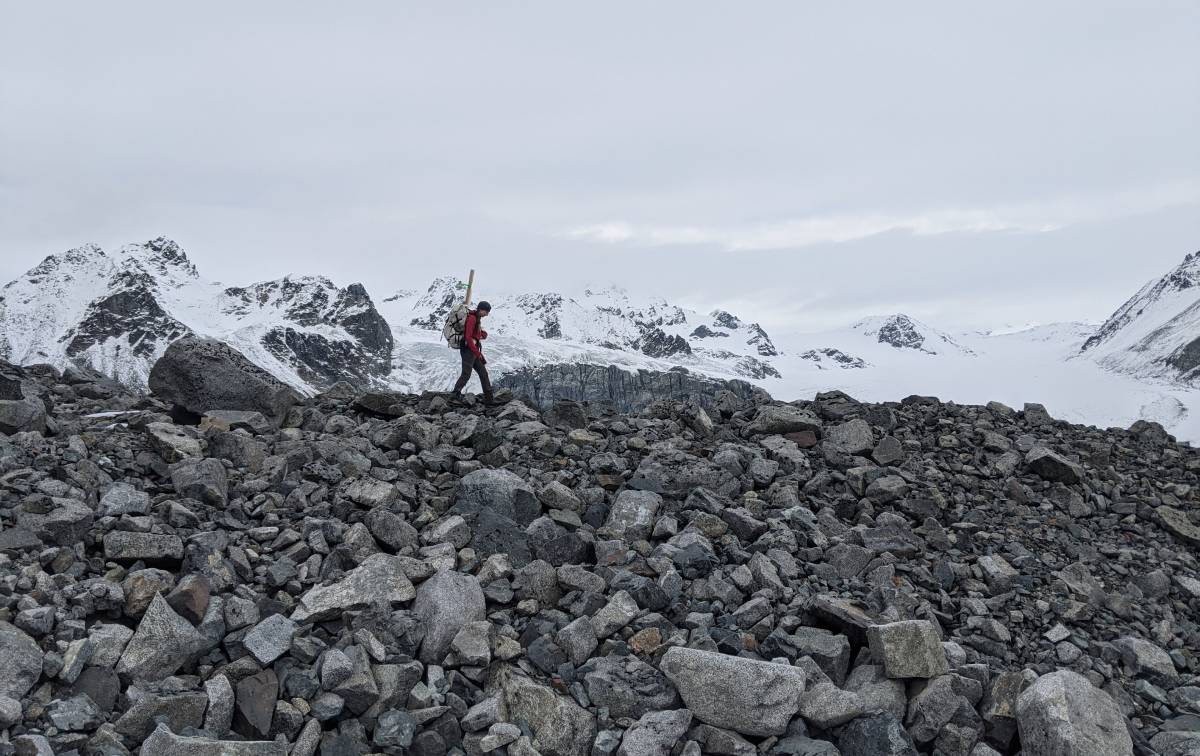
I paint here to sit with time, listen to the ice, and reckon with the discomfort that always shows up. It’s not the cold winds or the hard ground, or sleeping on snow or being soaked to my core ... What unsettles me is the sudden sensation that the tempo of change in this place has skipped a hundred beats ahead. The cold, wet feeling in my bones is that everything is connected and everything is at risk. All I know to do is to sit with my friend. To feel as I paint. To crack open and weather together (Maisch 2025).
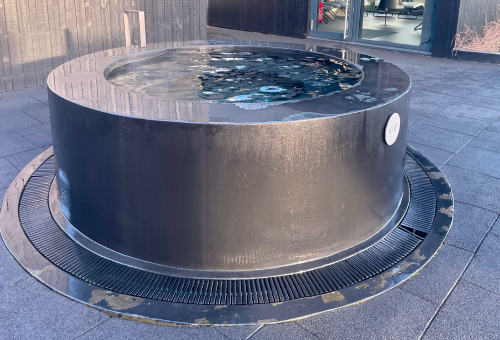
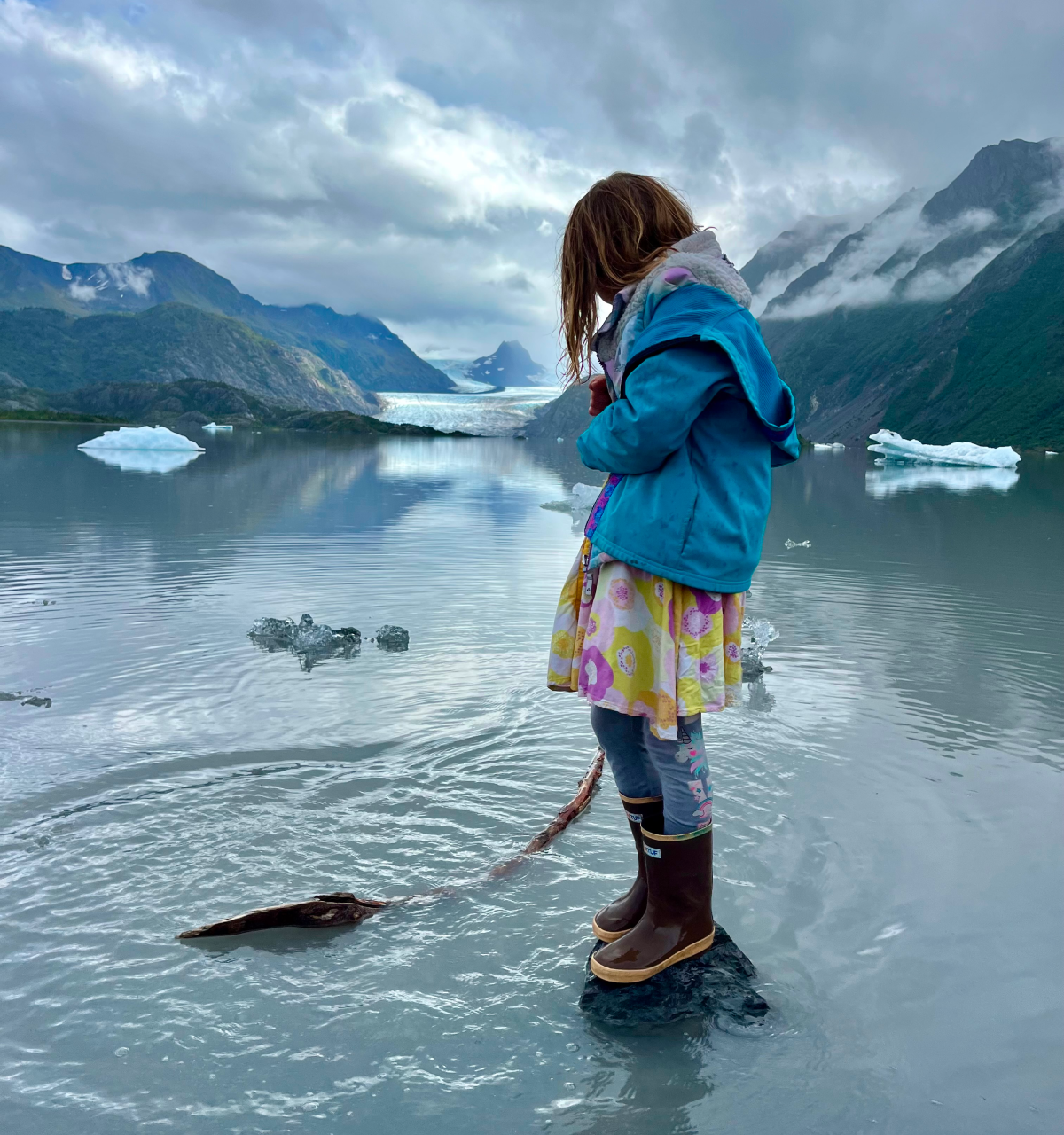
Comfort and ice/scapes are in relation by their complexity, subjectivity, measurement, how they are socially engaged with, and by how their definitions change depending on one’s race, gender, identity or physical proximity to each (Fennell 2011; Hobart 2023; Cao 2025). Ice can be comfortable by providing life-supporting systems such as a substrate for food availability, safe travel conditions, and the basis for cultural and spiritual practices. Alutiiq art historian and scholar Nadia Jackinsky-Sethi (2025) finds “comfort in knowing” Kachemak Bay (Alaska) “takes care of us,” a place that has sustained her family for generations. In her photograph Sibylle’s Place, glacial ice holds generational memory as it does cultural identity. A sentient ecology or Indigenous epistemology sees ice as alive and communicating; therefore, ice acts accordingly when dis/respected (Cruikshank 2006). Relationships with—and the comfort found or made by—ice, influence humans as much as humans influence the many lives and bodies of ice.
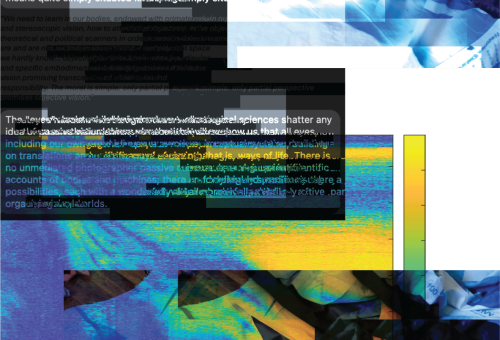
The physical presence and effect of ice, including how its melting affects a temperate world, can be uncomfortable (Smith 2020). Ice is embodied by its positionality within the cryosphere; life on Earth, as humans have come to know it, is directly and indirectly dependent on ice in some form. In her glitchy Spliced Glacier, New York-based artist Ada Pilar Cruz provokes viewers to question what they are seeing. Interrupting familiarity challenges the viewer’s relationship with both the image itself and the romanticized and crisis-driven narratives of ice, where ice is only considered by its melting (Whyte 2020; Smith 2022). This tension elicits the physicality of ice-albedo, the heating and cooling of the planet by ice reflecting the sun’s heat. In this way, ice viscerally regulates planetary and bodily comfort. The glacier’s visual disruption asks viewers to sit with the discomfort of what cannot be known and, perhaps, be okay with not knowing. The tidewater glacier is confusing yet recognizable and offers space to question who has access to such living and lived-in places, and how these places experience an ongoing colonial gaze by how they are visited, viewed and extracted from in our current digital age.
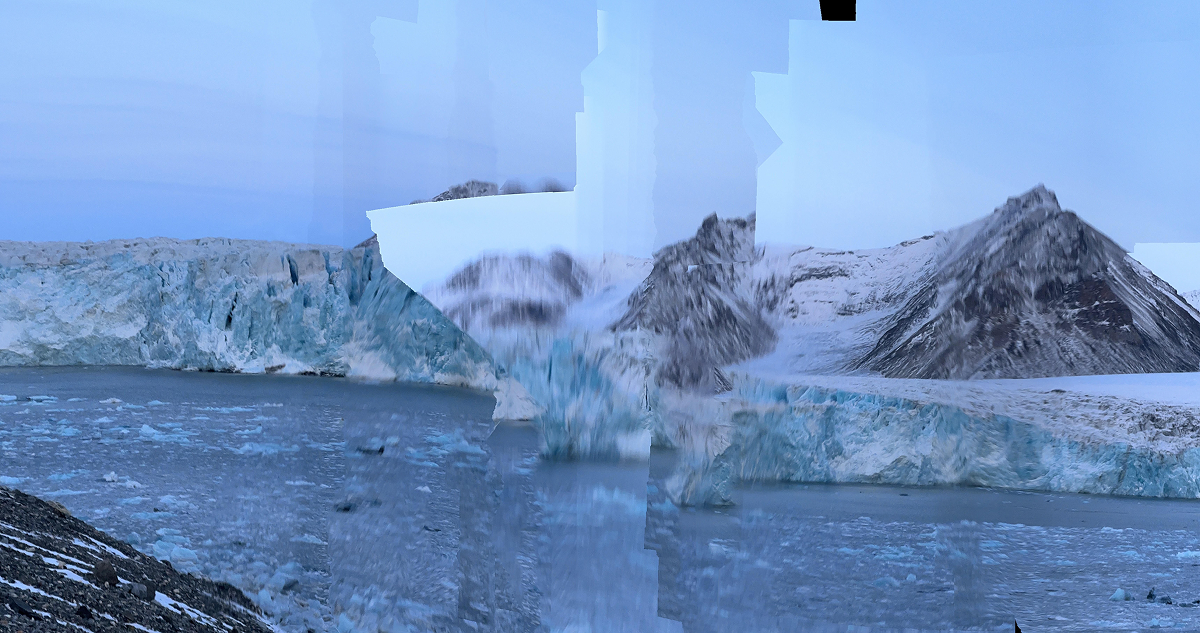
Through these ice-windows, exhibition viewers were encouraged to feel and question their own dis/comforts. Asking who dis/comfort is for in any given setting reveals the possibilities of the concept as a survival mechanism. dis/comfort enhances modes of active, dynamic presence and resistance towards imposed outsider narratives and pressures. Anti-spectacle ice narratives offer a sense of comfort to ‘weather’ ongoing colonialism, geopolitical posturing and the impacts of a rapidly changing climate.[4] Comfort, in this way, creates space to move through ongoing colonial conditions, while discomfort offers a reflection on why certain places, conversations, actions and cultural practices are or are not comfortable, and for whom.
dis/comfort reveals similar layers and overlapping descriptions, demonstrating the complexity of the concept as it explores how ice is felt, imagined, remembered and cared for. Reflect on how ice makes you feel or how you imagine or remember your encounters with ice. Write down descriptive words for how or when ice makes you comfortable or uncomfortable. Compare your list to see if there are overlaps.
Ahmed, Sarah. 2013. “Making Feminist Points.” feministkilljoys. https://feministkilljoys.com/2013/09/11/making-feminist-points/
Belcourt, Billy-Ray. 2020. “Fucking Around with Inuit Art.” Inuit Art Quarterly 35 (1): 40–47.
Cameron, Emilie. 2015. Far Off Metal River: Inuit Lands, Settler Stories, and the Making of the Contemporary Arctic. University of British Columbia Press.
Cao, Maggie. 2025. Painting US Empire: Nineteenth-Century Art and Its Legacies. University of Chicago Press.
Cruikshank, Julie. 2006. Do Glaciers Listen? Local Knowledge, Colonial Encounters, and Social Imagination. University of British Columbia Press.
Dickenson, Rochelle. 2022. “Care Full Discomfort: Engaged Decolonial Practice, People and Admin.” In The Routledge Companion to Indigenous Art Histories in the United States and Canada, edited by Heather Igloliorte and Carla Taunton, 284–95. Routledge.
Fennell, Catherine. 2011. “‘Project heat’ and sensory politics in redeveloping Chicago public housing.” Ethnography 12 (1): 40–64.
Hobart, Hiʻilei Julia Kawehipuaakahaopulani. 2023. Cooling the Tropics: Ice, Indigeneity, and Hawaiian Refreshment. Duke University Press.
Jackinsky-Sethi, Nadia. 2025. Submitted artist statement.
Maisch, Klara. 2025. Submitted artist statement.
Smith, Jen Rose. 2025. Ice Geographies: The Colonial Politics of Race & Indigeneity in the Arctic. Duke University Press.
Smith, Jen Rose. 2022. “Racialization and Resistance in the Ice Geographies of the Arctic and Colonized Alaska.” The Funambulist 40. https://thefunambulist.net/magazine/the-land/racialization-and-resistance-in-the-ice-geographies-of-the-arctic-and-colonized-alaska
Smith, Jen Rose. 2020. “‘Exceeding Beringia’: Upending universal human events and wayward transits in Arctic spaces.” Environment and Planning D: Society and Space 39 (1): 158-75.
Whyte, Kyle. 2020. “Against Crisis Epistemology.” In Handbook of Critical Indigenous Studies, edited by Brendan Hokowhitu, Aileen Moreton-Robinson, Linda Tuhiwai-Smith, Chris Andersen and Steve Larkin, 52–64. Routledge.
Portions of this article appear in the dis/comfort in the North exhibition catalogue, and in “Curating with dis/comfort.” More information on the exhibition can be found here. Sincere gratitude to my graduate advisory committee, Dr. Tyler Kirk, Dr. Zoë Marie Jones, Dr. Bart Pushaw and Dr. Jen Rose Smith.
All artwork is copyrighted by the artists featured and shared with their permission.