This is some text inside of a div block.
Search across the whole Roadsides site


Back in the day, the village saw two meters of snow.
There’s simply no snow anymore, but now there is rain in summer.
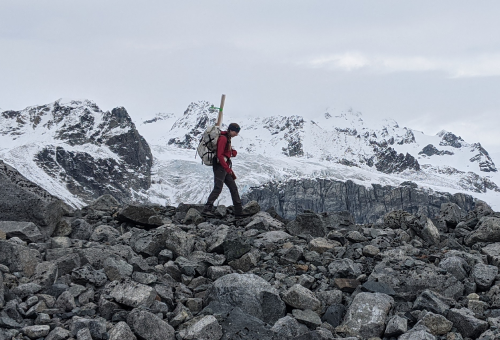
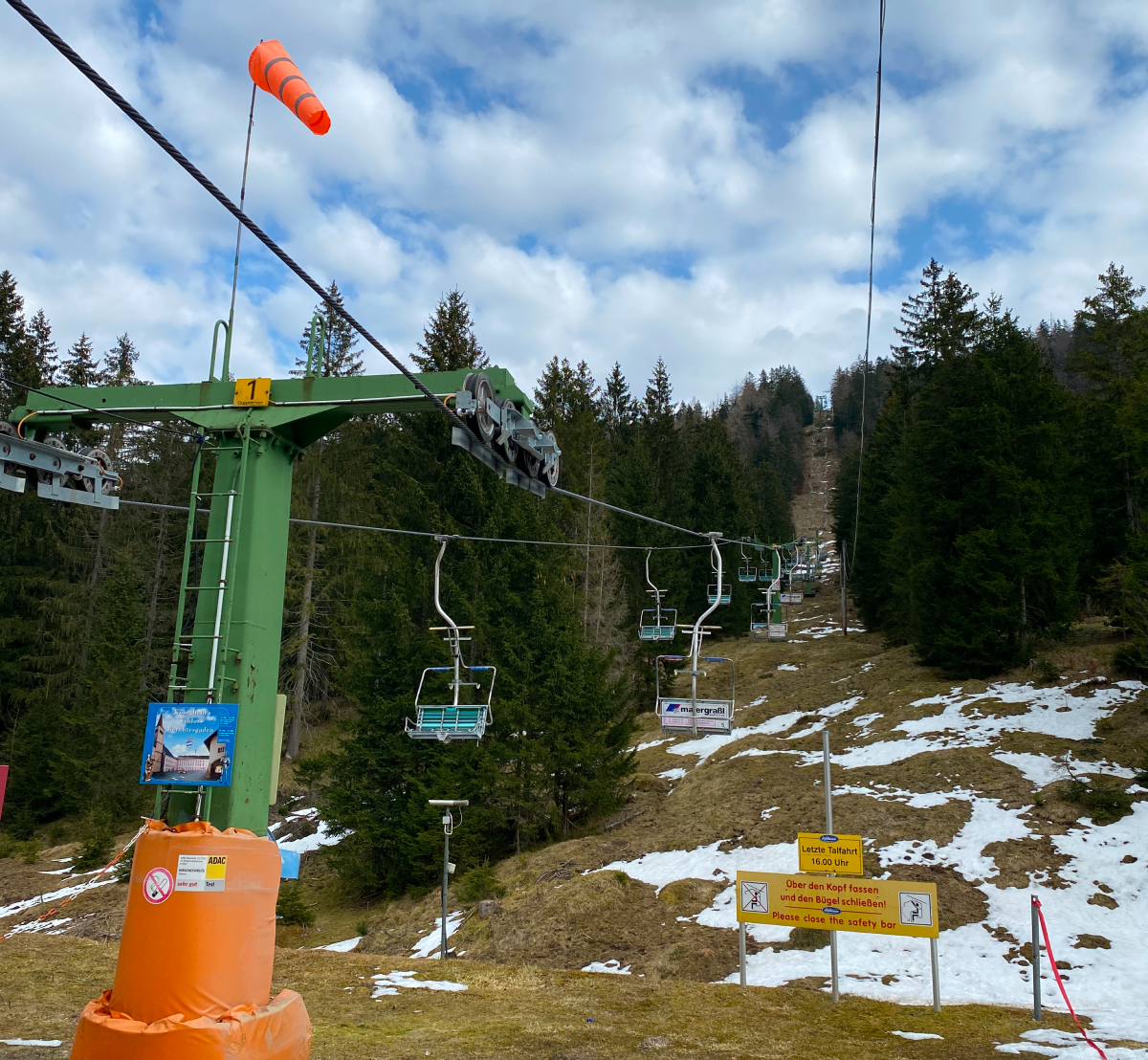
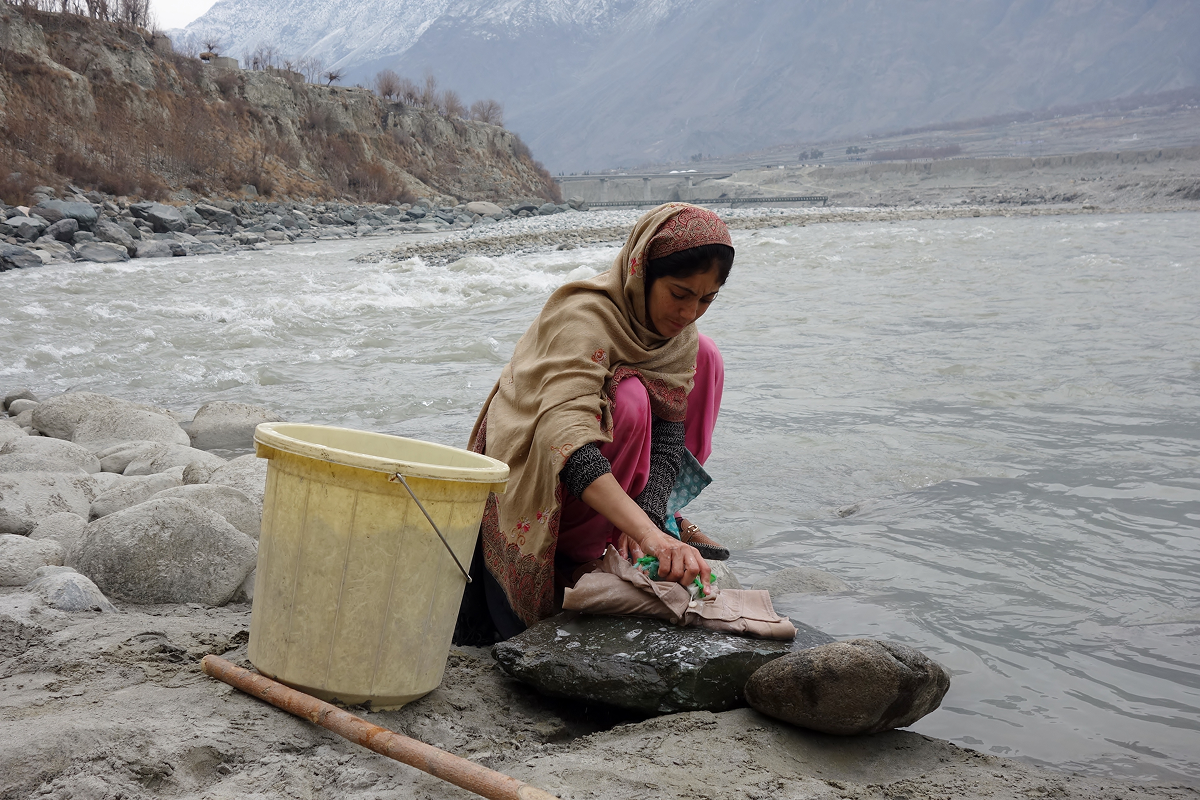
Such statements are commonly encountered in many cold regions of the world, be it the Arctic, the Alps or the Himalayas. These particular comments come from the Karakorum Mountains of northern Pakistan, Anna-Maria’s ethnographic home. In Asia’s arid high deserts, snow not only feeds glaciers but also serves as a water source for local communities to gradually replenish underground resources. Cloudbursts, on the other hand, destabilise barren slopes. In the Alps, rising snowlines and unreliable precipitation patterns pose not so much a hydrological threat as an existential economic one for the tourism industry. In response, ski resorts have turned to artificial snow production and other controversial technical means to keep the businesses alive (Nöbauer 2022). Although snowfall seemingly happens on its own, we cannot think of it without human influence and vice versa.
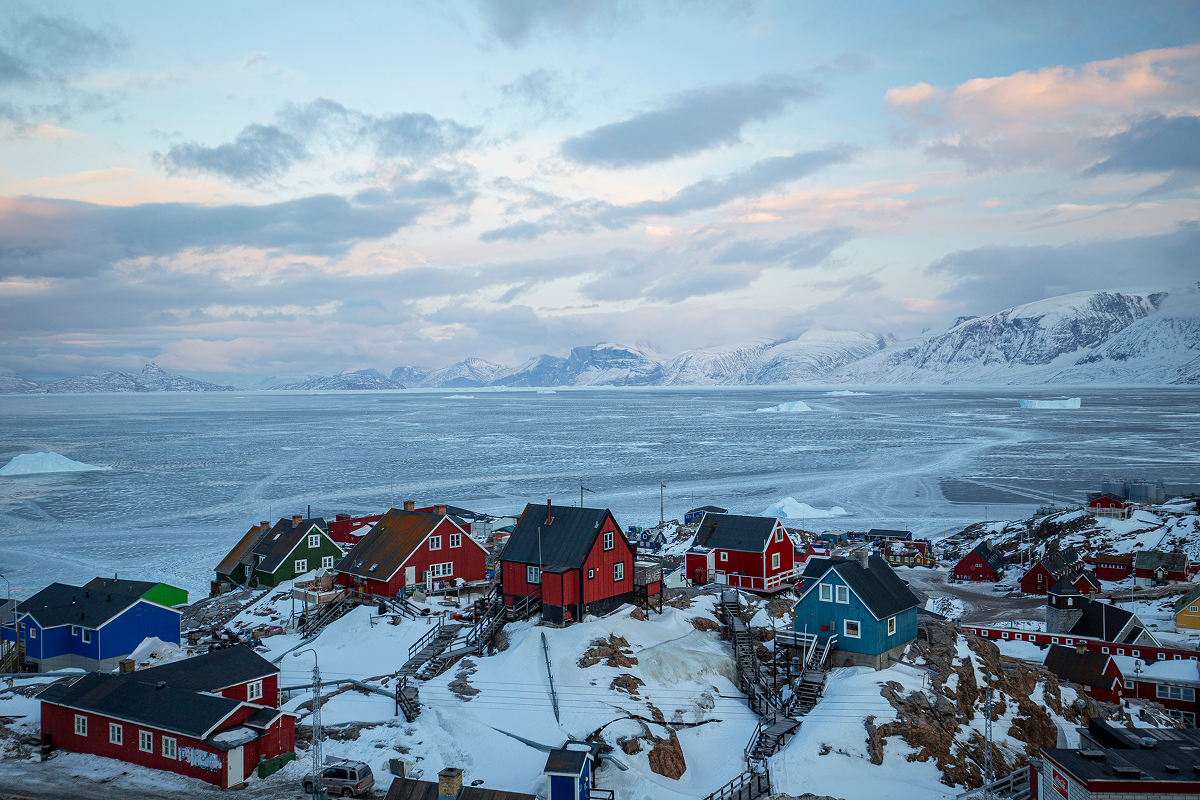
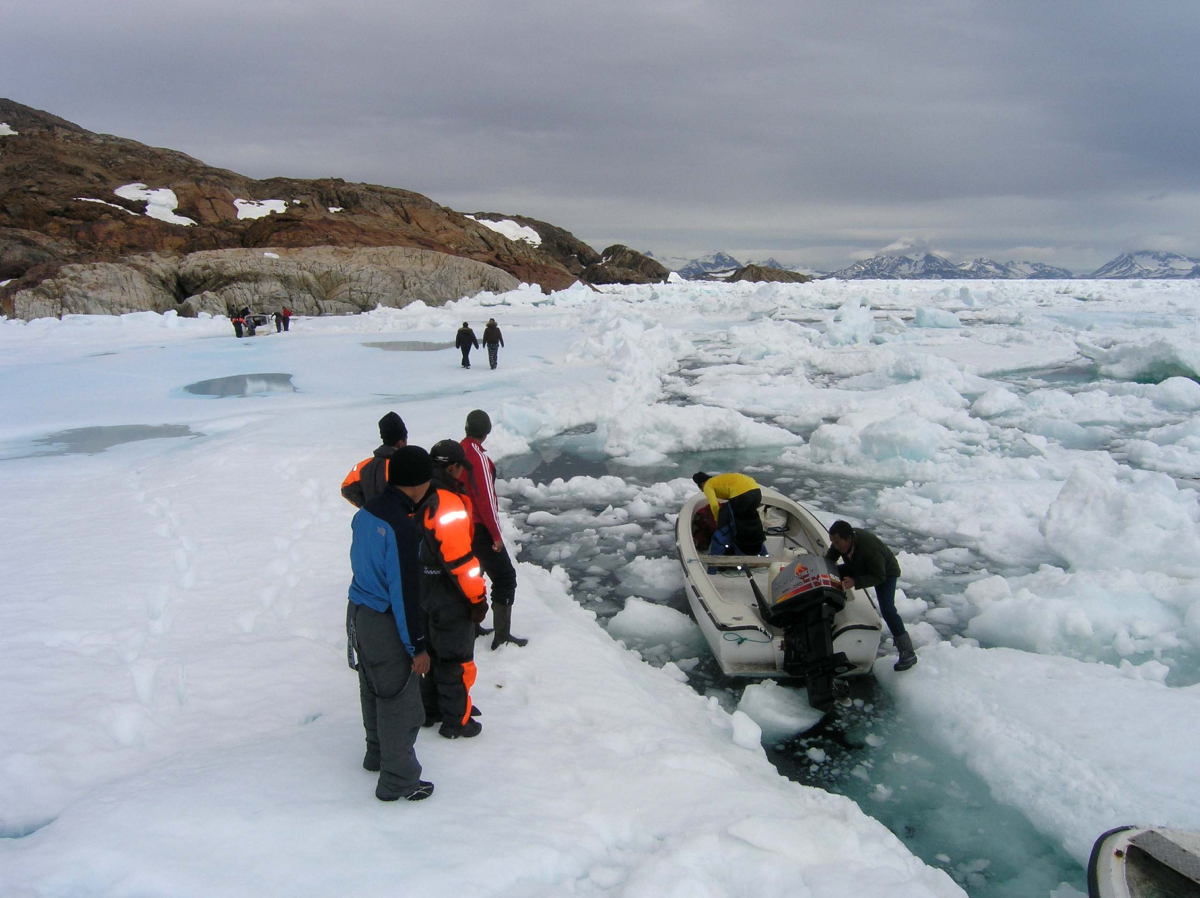
A gradual increase in rain and a lack of snow is also being experienced in the Arctic, as has been evident throughout Sophie’s fieldwork in Kalaallit Nunaat (Greenland). In Uummannaq, a town and island in the north-western Avannaata municipality, most of the Inuit residents lament the decrease in snowfall, but the decline in sea ice is considered a much bigger problem. Sea ice plays a vital role in community activities, facilitating hunting, fishing, social events and travel. It provides a habitat and a feeling of home, and is significant for people’s sense of belonging and identity (Gearheard et al. 2013). While the ice has been retreating year on year, the winter of 2024–25 was the first in a long time without solid ice cover. The weather was mild and the snow was wet. A resident explained that storms and strong winds kept breaking up the sea ice just as it was about to freeze over. Although fishermen made channels in the ice with their boats, travelling along these was time consuming and tedious. So, most residents had to remain on the island for the entire winter. As there are no roads connecting the island’s settlements, people from neighbouring villages who usually commute over the ice by car or snowmobile to Uummannaq town had to purchase expensive helicopter tickets. An elderly person stated emphatically: “We miss the ice and the cold weather. If there hadn’t been so much snow this winter, there certainly would have been ice.” In this case, a lot of snow has negative connotations as it represents warmer conditions and a lack of sea ice. At the same time, stable sea ice can also be dangerous in itself. According to locals, the qivittut—half-human, half-nonhuman creatures that appear in Greenlandic horror stories—can reach the town more easily over closed sea ice (Elixhauser and Gusenleitner 2025). Thus, ice can act as both a barrier and a facilitator, arising from an interplay of atmospheric and hydrological dynamics. These are increasingly being altered by anthropogenic climate change.
The integration of all physical and meteorological processes related to snow and ice is the achievement of the Polish geophysical scientist Antoni Dobrowolski (1904–2012), who coined the term cryosphere in the early twentieth century. The cryosphere, defined as “a zone extending from the upper part of the troposphere, where ice crystals occur in clouds, to the base of the permafrost” (Barry, Jania and Birkenmajer 2011: 76), enables us to connect different scales along the axis of frozen water. Our understanding, however, extends beyond that physical definition. Drawing on the interdisciplinary field of Ice Humanities (Dodds and Sörlin 2022), we use the term cryosphere to encompass the epistemic, cultural and scientific practices that produce icy realities for various actors and beings along the continuum of frozen water.
This collection focuses on the changing cryosphere as a form of infrastructure that is utilised and co-created by humans, other species and a variety of beings. Rather than concentrating on the built environment or the often-unpredictable effects of infrastructural projects, the contributions here address the co-production of cryospheric structures and processes. Framing the cryosphere as infrastructure means understanding glaciers, (sea) ice, snow and permafrost as dynamic, more-than-human assemblages that organise mobility, livelihoods and social relations. Our thinking is inspired by Canadian Indigenous scholars, and their critical deconstruction of modernist takes on infrastructure, such as of LaDuke and Cowen’s (2020: 263) notion of “infrastructure otherwise,” Spice’s (2018: 40) account of Indigenous “critical infrastructure,” and Pasternak et al.’s (2023) decolonial reframing of infrastructure. We push further along these lines to foreground cryospheric processes that unfold through non-built yet highly relational environments as infrastructural formations within which jurisdiction, care and resistance take shape.
Shifting the focus to non-built or hybrid infrastructures reveals the inherent anthropocentrism of existing infrastructure studies in the social sciences and humanities (Larkin 2013; Harvey et al. 2017; Anand et al. 2018; Schweitzer et al. 2026). While acknowledging the “simultaneity of the material and the social in the coming-into-being of infrastructural forms” (Reeves 2017: 713), our approach recognises the power asymmetries that global climate change produces in manifold local realities. Water and food security for many people, especially Indigenous and remote communities, is already severely compromised and geopolitical interests prevail (Hovelsrud et al. 2011; Hastrup 2013; Hoffmann et al. 2022; Strauss-Mazullo and Tennberg 2023).
This collection brings together a variety of geographies, scales and temporalities. Long considered ‘frozen in time’, the vast glacial masses now vividly demonstrate that they are constantly in motion. In their “dys-appearance” (Leder 1990: 87), glaciers and other frozen matter attract attention and bring the cryosphere to the fore from its oft-overlooked “background-ness” (Rippa 2023: 26, referring to Hetherington 2019). Place-based narratives, embodied memories or historical accounts provide insights into the long-term management of cryospheric change (Cruikshank 2005; Watt-Cloutier 2018; Bennett 2019; Heggie 2019; Ruiz et al. 2024). Although ice is often imagined as empty and inert, such a perception is the result of a long colonial history, during which ice became a setting for masculine, imperialist projects of control, scientific authority and resource extraction (Carey 2016; Smith 2025). Viewed in this way, ice facilitates the systematic erasure and dismissal of alternative histories and knowledges. Instead of reducing the current conditions of snow and ice to a narrative of melting, we focus on the slow and careful processes that stem from the interactions between humans, animals and other beings and entities. Contributions explore the diversity of experiences, memories and multi-sensory perceptions through which science, local populations and visitors have developed practices and strategies for engaging with – or disengaging from – snow and ice. To grasp their intimate and emergent character, it is crucial to consider the materiality and the affective dimensions of snow and ice as vital matter (Simonetti 2021; Krause 2022; Gagné and Drew 2024).
The tensions between dying ice and changing livelihoods appear as a common thread running through the contributions. These dynamics reflect the ephemeral quality of snow, ice and glaciers, while underscoring the reality of accelerated environmental change. Craney’s exhibition considers the dis/comfort of ice in the everyday lives of Arctic communities and newcomers, portraying it as both familiar and unruly. This resonates with Schaub and Carey’s description of dead glacier infrastructures that captures the strange attraction of a prolonged dying process. Focusing on glaciological research in Antarctica, an exploratory piece by Case, Hoffman, Mode and Rai examines the viscous texture of ice and human knowledge about this material. Bakhmetyeva and Weaver describe a similar process for imperial Russia, where scientific explorations tried to gloss over the vitality of glacial landscapes by freezing them within a rigid spatial order. In her playful contribution, Bowman situates cryospheric change within an inescapable maze of climate engineering – yet no satisfactory solution has emerged so far. Challenging the Euro-American success narrative of science and technology, Wang critically examines knowledge transmission from China to the West with the example of icehouses that once lined the banks of the Yong River in Ningbo.
All of these contributions indirectly argue that a reversal of epistemological direction is needed. This approach challenges fixed preconceptions by redefining the various components of the cryosphere as dynamic, living infrastructures rather than static landscapes or assets. Gagné’s account of a Himalayan folktale showcases a local person’s competent intervention to harness the vitality of water and ice. Set in the Peruvian Andes, Shutkin’s contribution highlights the relationship between communities and their cryospheric environment through an annual festival for a mountain deity. Meanwhile, Hasina’s case study from the Pakistani Karakorums uncovers how young musicians, who grew up partially alienated from local ecologies, recognise the need to restore spiritual connections with the environment to acquire a sense of belonging. Rohr’s piece reflects a similar trajectory. Through alpinists’ representations in glacier imagery, he identifies the staging of mountaineers in early photography as a predecessor of an “Instagram society.”
Thus, it is not so much a question of glaciers exerting an agentive force to haunt humans, but rather the reverse: how is snow and ice haunted by us? This collection invites a pause, encouraging reflection and the cultivation of understanding—like allowing snow crystals to grow slowly—aligning with the elements’ ephemerality and flexibility. Cryospheric infrastructures shift the focus from conquest to an open-ended process of intersubjective attentiveness that emphasises the importance of patience, care and reciprocal engagement.
Anand, Nikhil, Akhil Gupta and Hannah Appel. 2018. The Promise of Infrastructure. Duke University Press.
Barry, R. G., Jania, J. and K. Birkenmajer. 2011. “Review article ‘A. B. Dobrowolski – the first cryospheric scientist – and the subsequent development of cryospheric science’.” History of Geo- and Space Sciences 2 (1): 75–79. https://doi.org/10.5194/hgss-2-75-2011
Bennett, Mia. 2019. “Midnight blues in the melting Arctic.” Roadsides 1: 42–49.
Carey, Mark, M. Jackson, Alessandro Antonello and Jaclyn Rushing. 2016. “Glaciers, gender, and science: A feminist glaciology framework for global environmental change research.” Progress in Human Geography 40: 770–93.
Cruikshank, Julie. 2005. Do Glaciers Listen? Local Knowledge, Colonial Encounters, and Social Imaginations. University of British Columbia Press.
Dodds, Klaus and Sverker Sörlin (eds). 2022. Ice Humanities: Living, Working, and Thinking in a Melting World. Manchester University Press.
Elixhauser, Sophie and Theresa Gusenleitner. 2025. “Citizen science, anthropology and intercultural transdisciplinarity: Connecting school students in Greenland and Austria on the topic of snow.” Sociologus 73 (2): 129–50.
Gagné, Karine and Georgina Drew. 2024. “Vital matter: Icy liveliness in the Anthropocene.” Social Anthropology/Anthropologie Sociale 32 (1): 1–12. https://doi.org/10.3167/saas.2024.320102
Gearheard, Shari, Lene Kielsen Holm, Henry Huntington, Joe M. Leavitt, Andrew R. Mahoney, Margaret Opie, Toku Oshima and Joelie Sanguya (eds). 2013. The Meaning of Ice: People and Sea Ice in Three Arctic Communities. International Polar Institute Press.
Harvey, Penny, Casper Bruun Jensen and Atsuro Morita (eds). 2017. Infrastructures and Social Complexity: A Companion. Routledge.
Hastrup, Kirsten. 2013. “The ice as argument: Topographical mementos in the high arctic.” The Cambridge Journal of Anthropology 31 (1): 51–67.
Heggie, Vanessa. 2019. Higher and Colder: A History of Extreme Physiology and Exploration. University of Chicago Press.
Hetherington, Keith (ed.). 2019. Infrastructure, Environment, and Life in the Anthropocene. Duke University Press.
Hoffman, Susanne M., Thomas Hylland Eriksen and Paulo Mendes (eds). 2022. Cooling Down: Local Responses to Global Climate Change. Berghahn.
Hovelsrud, Grete K., Birger Poppel, Bob van Oort and James D. Reist. 2011. “Arctic societies, cultures, and peoples in a changing cryosphere.” Ambio 40: 100–110. https://doi.org/10.1007/s13280-011-0219-4
Krause, Franz. 2022. “The tempo of solid fluids: On river ice, permafrost, and other melting matter in the Mackenzie Delta.” Theory, Culture & Society 39: 31–52. https://doi.org/10.1177/02632764211030996
LaDuke, Winona and Deborah Cowen. 2020. “Beyond Wiindigo infrastructure.” South Atlantic Quarterly 119 (2): 244–68.
Larkin, Brian 2013. “The politics and poetics of Infrastructure.” Annual Review of Anthropology 42: 327–43. https://doi.org/10.1146/annurev-anthro-092412-155522
Leder, Drew. 1990. The Absent Body. University of Chicago Press.
Nöbauer, Herta. 2022. “Weather, agency and values at work in a glacier ski resort in Austria.” In The Anthropocene of Weather and Climate: Ethnographic Contributions to the Climate Change Debate, edited by Paul Sillitoe, 124-45. Berghahn.
Pasternak, Shiri, Deborah Cowen, Robert Clifford, Tiffany Joseph, Dayna Nadine Scott, Anne Spice and Heidi Kiiwetinepinesiik Start. 2023. “Infrastructure, Jurisdiction, Extractivism: Keywords for Decolonizing Geographies.” Political Geography 101: 1–9. https://doi.org/10.1016/j.polgeo.2022.102763
Reeves, Madeleine. 2017. “Infrastructural hope: Anticipating ‘independent roads’ and territorial integrity in Southern Kyrgyzstan.” Ethnos 82 (4): 711–37.
Rippa, Alessandro. 2023. “Infrastructure and the environment in anthropology.” Social Science Information 63 (1): 25–46. https://doi.org/10.1177/05390184231189126
Ruiz, Rafico, Paula Schönach and Rob Shields (eds). 2024. After Ice: Cold Humanities for a Warming Planet. UBC Press.
Schweitzer, Peter, Olga Povoroznyuk and Philipp Budka. 2026. “Introduction to the Special Issue ‘Ethnographies of Infrastructure’.” Journal of Contemporary Ethnography 55 (1): 3–13. https://doi.org/10.1177/08912416251398433
Simonetti, Cristián. 2021. “Viscosity in matter, life and sociality: The case of glacial ice.” Theory, Culture & Society 39 (1): 111–30.
Smith, Jen Rose. 2025. Ice Geographies: The Colonial Politics of Race and Indigeneity in the Arctic. Duke University Press.
Spice, Anne. 2018. “Invasive infrastructures: Indigenous relations against pipelines.” Environment and Society: Advances in Research 9: 40–56.
Strauss-Mazullo, Hannah and Monica Tennberg (eds). 2023. Living and Working with Snow, Ice and Seasons in the Modern Arctic: Everyday Perspectives. Palgrave Macmillan.
Watt-Cloutier, Sheila. 2018. The Right to be Cold: One Woman’s Story of Protecting Her Culture, the Arctic and the Whole Planet. University of Minnesota Press.
We would like to thank all the authors, the Roadsides editorial team and the following reviewers for their work, support and inspiring contributions: Katja Doose, Stephanie Matti, Galen Murton, Nadine Plachta, Joanna Radin, Alexis Rider, Alessandro Rippa, Martin Saxer, Jolynna Sinanan, Martin Sökefeld and Albert van Wijngaard. This work was supported by the Austria’s Agency for Education and Internationalisation OeAD Sparkling Science (project Snow2School) as well as a fellowship at LMU's Center for Advanced Studies and the Rachel Carson Center. The initial idea grew out of a wonderful round of workshop participants at the World Congress for Environmental Humanities in Oulu in 2024.
Three articles in this Collection were funded by the Deutsche Forschungsgemeinschaft (DFG) under Germany’s Excellence Strategy—EXC 3137: TransforM: Munich Center for Transformative Technologies and Societal Change—Project number 533801653.